Showing posts with label Drugs. Show all posts

Tuesday, March 26, 2013

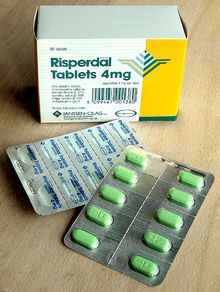
Janssen Pharmaceutical Risperdal Appeal

South Carolina Lawyers Weekly ran an article last week concerning Janssen Pharmaceutica's appeal of a $327 million penalty handed down by Judge Robert Couch in 2011. I did extensive blogging about this case in March and June of 2011, and you can find those posts either by searching "Risperdal" in the search bar above or by clicking here (March 9, 2011), here (March 22, 2011), here (March 23, 2011), here (June 6, 2011), and here (June 7, 2011, which is a link to Judge Couch's Order concerning damages).

According to the article, Janssen's attorney argued before the South Carolina appellate court that Janssen did not mean to deceive anyone, and no one in the state was hurt.  The attorney representing South Carolina Attorney General Alan Wilson argued Janssen had a duty to update its labels when it learned of study results showing a possible link to weight gain and diabetes.  According to the article, the court is likely to issue its decision in several months.  A direct link to the article can be found here.  A cut and paste of the article is below.  Nice coverage by South Carolina Lawyers Weekly.

Drug maker asks court to overturn $327M penalty

By The Associated Press
Published: March 21, 2013
Time posted: 4:20 pm

COLUMBIA (AP) - South Carolina's high court should overturn a penalty of hundreds of millions of dollars over deceptive drug marketing in part because the manufacturer didn't mean to deceive anyone, and no one in the state was hurt, an attorney for a Johnson & Johnson subsidiary argued before justices on Thursday.

Mitch Brown represents Janssen Pharmaceutica Inc., a subsidiary of New Brunswick, N.J.-based Johnson & Johnson. The drug maker is challenging a Spartanburg County jury's 2011 decision that Janssen broke the law by writing to thousands of South Carolina doctors, downplaying the links between diabetes and its schizophrenia drug Risperdal, and by improperly claiming the drug was safer than competing medications, like Eli Lilly & Co.'s Zyprexa.

"The conduct hasn't caused one South Carolinian any harm," Brown told the state Supreme Court. "The state can't get any penalties without showing the element of willfulness. … There wasn't any evidence that any doctor was misled."

Janssen has been litigating throughout the country over its Risperdal marketing, announcing in August a $181 million settlement with 36 states and the District of Columbia. Janssen admitted no wrongdoing, and South Carolina was not part of that deal.

First launched in 1994, the blockbuster anti-psychotic drug Risperdal lost patent protection in 2008. Johnson & Johnson has said that Risperdal Consta, the long-acting version of the drug, generated $1.4 billion in sales last year.

After the South Carolina jury's decision, a state judge assessed a $327 million penalty against Janssen, the largest drug marketing award in state history and the largest penalty levied for violations of the South Carolina Unfair Trade Practices Act.

Circuit Judge Roger Couch assessed a $300 penalty per sample box of the drug that was distributed. He also assessed a $4,000 penalty per publication of the "Dear Doctor" letter, writing that Janssen knew Risperdal was associated with health problems but intentionally hid studies to that effect, instead telling doctors their drug led to lower incidence of diabetes and weight gain than a competing medicine.

Justice John Kittredge argued to Brown that, while the sample box labels in question had been approved by the U.S. Food and Drug Administration, the drug company should still bear some responsibility in ensuring that its products and marketing aren't also in violation of state laws.
"You're putting it on the back of the FDA to be the police of this," Kittredge said.

John Simmons, who made arguments on behalf of Attorney General Alan Wilson, called the circuit judge's opinion "thoughtful" and said Janssen should have updated its labels as soon as it learned of study results showing the drug's possible links to weight gain and diabetes.

"Janssen had a duty … to put that in the warning section," Simmons said. "Janssen hid unfavorable clinical evidence."

The court will likely issue its decision in several months. Should they opt to reduce the award against Janssen, Brown asked justices to determine "a reasonable penalty amount" themselves and not leave that decision up to a lower court judge.

The company is also appealing an Arkansas judge's decision ordering Janssen to pay more than $1.2 billion in fines, as well as a $258 million verdict in Louisiana. Two cases against Janssen in Pennsylvania and West Virginia were eventually dismissed.
This post is subject to the DISCLAIMER AND TERMS OF USE of this website.

Tuesday, June 7, 2011

Exclusive: Copy of Judge's "Penalty Order" in SC Risperdal Action

Well, maybe not "exclusive," but I did manage to obtain a copy of the Penalty Order in the South Carolina Attorney General's action against Johnson and Johnson and the award of $327 million in damages against the pharmaceutical company (which I have blogged about, including a post yesterday).  Since that post, I have obtained a copy of Judge Roger Couch's "Penalty Order" in which he sets damages and explains the rationale for them.  You can find a copy of the Penalty Order at this link

I have not had a chance to digest the Order yet, and I wanted to get it posted as I can tell from my site statistics that there is considerable interest about this case and the award of damages.  However, from my quick review, the high spots are as follows:
  • The judge focuses on the "Credo of Johnson and Johnson" as published on its website and referred to in annual reports to tee up how he is approaching the case (p. 3).
  • He recognizes the benefits of drug companies, medicine in general, and even Risperdal.  He also points out that they are a for-profit company...but he goes back to the Credo as the company's "first obligation" (pp. 3-4).
  • He assesses the good/bad faith of the defendant and stresses that he is focused on what was known about the drug at the time statements were made (pp. 4-5).
  • He reviews the labeling of the drug, what the company knew and when, and finds that the "Defendants exhibited a callous disregard to a patient's right to have all possible information available, and in the hands of their physician, before deciding to use or continue to use the drug" (p. 8). 
  • He reviews the "Dear Doctor" letter from November of 2003 and describes it as an effort to "manipulate the message about Risperdal" (p. 9).  He also relies on some testimony from a Janssen executive about the "Dear Doctor" letter that is unfavorable (p. 10) and concludes that the actions of the company exhibited "extreme bad faith" (id.).
  • He talks about "Injury to the Public" as a component of a South Carolina Unfair Trade Practices action, including reference to his charge on this component (pp. 10-12).  He notes that the jury found that the actions injured the public and were capable of repetition (p. 12).
  • He assesses the "Desire to eliminate the benefits derived from a violation" and admits that this is "virtually impossible to accurately determine" (p. 13).  However, he points out the profit from the drug were "enormous," but also notes the releative small percentage of business conducted in South Carolina (id.).
  • He assesses "The necessity of vindicating the authority of the agency involved" and notes that the South Carolina Attorney General is the one with the burden and duty to vindicate the public's interest in the case (pp. 13-14).
  • He then goes into "The Defendant's ability to pay" at length (pp. 14-16), including the number of violations.  This includes a statement of Annual Sales of Risperdal worldwide (p. 15) and J&J's earnings.
  • Finally, he assesses the number of times the label was published -- 509,499 sample boxes distributed -- and assesses $300 per violation, for a total of $152,849,700 (p.16-17).  He does similar analysis for the number of "Dear Doctor" letters mailed (7,184) and sales calles where the letter was published (36,372), for a total publication of 43,556, and assesses $4,000 per violation, for a total of $174,224,000 (id).
  • Therefore, the total damages are $327,073,700 (p. 17).
An interesting order, and I welcome reader comments. 

This post is subject to the DISCLAIMER AND TERMS OF USE of this website.

Monday, June 6, 2011

SC Judge Hands Down Damages Order in Johnson & Johnson Risperdal Case

 I have previously blogged (here and here) about South Carolina Attorney General Alan Wilson's lawsuit against Johnson & Johnson and the March 22, 2011 jury verdict against the pharmaceutical manufacturer.  A jury concluded that J&J violated South Carolina's consumer protection laws by sending South Carolina doctors a misleading letter about the safety and effectiveness of the anti-psychotic drug Risperdal.

Last Friday, Judge Roger Couch issued his order on damages in which he ordered J&J to pay $327 million.  An article about the decision can be found at this link, and it is cut and pasted below.  Thanks to bloomberg.com for the excellent coverage.

J&J Ordered to Pay $327 Million Over Deceptive-Marketing Claims

By Jef Feeley and Steven Church - Jun 4, 2011 12:01 AM ET

J&J Risperdal

Johnson & Johnson's schizophrenia drug Risperdal. Photographer: JB Reed/Bloomberg News.

A Johnson & Johnson (JNJ) unit was ordered by a South Carolina judge to pay more than $327 million in penalties for deceptively marketing the antipsychotic drug Risperdal as safer and better than competing medicines.

J&J’s Ortho-McNeil-Janssen Pharmaceuticals unit repeatedly violated the state’s consumer-protection laws by sending a 2003 letter to doctors touting Risperdal as superior to rival drugs and including deceptive information in the product’s warning label, Judge Roger Couch in Spartanburg, South Carolina, concluded.

The drugmaker’s executives “allowed the profit-at-all- costs mentality to cloud” their judgment in connection with the drug’s marketing campaign and its labeling, Couch said in his 17-page ruling.

Janssen official said yesterday they’ll appeal Couch’s order and maintained the company fully disclosed Risperdal’s health risks and properly marketed the antipsychotic medicine.

“We don’t believe that the dissemination of an FDA- approved package insert constitutes a violation of the South Carolina Trade Practices Act,” Kara Russell, a spokeswoman for Janssen said in an e-mailed statement. “We do not believe the ruling can be upheld on appeal.”

South Carolina’s lawyers, who originally sued the J&J unit in 2007 for making misleading claims about Risperdal, sought billions of dollars in penalties over the targeted marketing and labeling material.

Sales Decline

Risperdal’s global sales peaked at $4.5 billion in 2007 and declined after the company lost patent protection. The drug generated $3.4 billion in sales in 2008, or 5.4 percent of New Brunswick, New Jersey-based J&J’s total revenue, according to company filings. Sales of the drug fell to $527 million last year, according to a January earnings report.

Risperdal Consta, the long-acting version of the antipsychotic drug, generated $1.5 billion in sales last year for J&J.

The state’s case centered on drug-safety claims that J&J and Janssen made in November 2003 correspondence to about 700,000 doctors across the U.S., including more than 7,000 in South Carolina.

The U.S. Food and Drug Administration responded with a warning letter saying J&J made false and misleading claims that minimized the potentially fatal risks of diabetes and overstated the drug’s superiority to competing products.

South Carolina’s lawyers argued during a two-week trial of the state’s suit that Risperdal’s safety label also downplayed diabetes and other health risks.

‘Clever Effort’

The faulty labels were included in as many as 722,000 Risperdal prescriptions written in South Carolina from 1994 to 2007, the state’s lawyers told Couch at an April hearing. The deceptive information also was presented in 183,144 sales calls on doctors by Janssen drug representatives, and 496,565 sample boxes distributed over that 13-year period, South Carolina’s lawyers argued.

In his ruling, Couch found the Risperdal letter to South Carolina doctors was a “clever effort” to “manipulate the message” about the drug.

He concluded penalties were warranted for 7,180 letters Janssen officials mailed to physicians in the state along with another 36,372 instances in which the drugmaker’s salespeople used the missive to market Risperdal in person, according to court records.

$4,000 per Violation

Couch awarded South Carolina a total of $174.2 million in penalties over the letter based on a rate of $4,000 per violation of the state’s consumer-protection laws, according to his ruling.

He also found 509,499 sample boxes of Risperdal distributed in the state contained labels with deceptive materials that warranted penalties. The judge awarded the state $152.8 million in penalties over the label at a rate of $300 per violation.

J&J’s lawyers claimed in court papers that the state engaged in “triple counting” by seeking to have prescriptions, marketing letters and sales calls on individual doctors included as violations.

Penalizing the drugmaker for multiple contacts with doctors who were allegedly “misled or deceived each time he or she had been exposed to” the targeted information would be unfair, Steven Pugh, one of the company’s attorneys, said in May 3 filing.

Hold Them Accountable

The award puts drugmakers on notice that if they “try to spin information or try to see what they can get away with,” state officials will hold them accountable, Donald Coggins, a Spartanburg-based lawyer who represented the state, said in an interview yesterday.

The case is the third of about 10 state lawsuits to be considered by jurors over J&J’s Risperdal marketing campaigns. In June, J&J won dismissal of Pennsylvania’s suit alleging the company hid the drug’s diabetes risk and tricked regulators into paying millions more than they should have for the medicine.

A Louisiana jury in October ordered the drugmaker to pay $257.7 million in damages to that state for making misleading claims about Risperdal’s safety. A judge later added $73 million in legal fees to the award.

A West Virginia judge in a 2009 non-jury trial awarded $3.95 million, finding the company misled doctors about the risks and benefits of Risperdal. The state dropped its Risperdal claim after J&J won an appeal, company officials said in February.

J&J fell 39 cents to $66.09 in New York Stock Exchange composite trading yesterday. J&J’s 4.95 percent bonds due in 2033 fell 1.36 percent to 102.3 cents on the dollar, according to Trace, the bond-price reporting system of the Financial Industry Regulatory Authority.

The case is State of South Carolina v. Janssen Pharmaceuticals, 2007-CP-42-1438, Circuit Court for Spartanburg County, South Carolina (Spartanburg).

To contact the reporter on this story: Jef Feeley in Wilmington, Delaware, at jfeeley@bloomberg.net; Steven Church in Wilmington, Delaware, at schurch3@bloomberg.net

To contact the editor responsible for this story: Michael Hytha at mhytha@bloomberg.net

This post is subject to the DISCLAIMER AND TERMS OF USE of this website.

Wednesday, June 1, 2011

SC Attorney General Action Against GlaxoSmithKline

South Carolina Attorney General Alan Wilson has brought another lawsuit against a pharmaceutical manufacturer.  On May 17, the Office of the Attorney General filed a lawsuit against GlaxoSmithKline in which he alleges that the pharmaceutical manufacturer improperly marketed the diabetes drug Avandia.  I have not seen a copy of the complaint, but an article here at wcnc.com (and cut and pasted below) seems to suggest that this is another off-label promotion lawsuit, similar to past lawsuits brought by South Carolina against pharmaceutical companies.  (See blog posts about prior off-label promotion lawsuits here).  There are also some inadequate warning allegations according to the article. 

SC prosecutor suing GlaxoSmithKline over Avandia

SC prosecutor suing GlaxoSmithKline over Avandia
Credit: FILE PHOTO

by MEG KINNARD / Associated Press

COLUMBIA, S.C. (AP) -- British drug maker GlaxoSmithKline PLC improperly marketed the diabetes drug Avandia to South Carolina consumers, hiding the medication's harmful side effects, according to a lawsuit filed by the state's top prosecutor.

Posted on June 1, 2011 at 8:56 AM

A spokeswoman for the company, however, said GlaxoSmithKline supports both its drug and the ways in which it was marketed.

In a lawsuit filed May 17 in Spartanburg County, Attorney General Alan Wilson argued that the drug maker acted negligently when it claimed that Avandia did not put patients' hearts at risks and could actually reduce the potential for heart problems.

"GSK did not just fail to disclose the potential cardiovascular risks Avandia posed, which include heart attacks and sudden cardiac death, it affirmatively represented that Avandia could reduce diabetics' cardiovascular risks," Wilson wrote. "GSK knew or should have known that these representations were not true and likely to deceive."

First approved by the Food and Drug Administration in 1999, Avandia quickly became the top-selling diabetes pill in the world. The drug works by increasing the body's sensitivity to insulin, a key protein needed for digestion that diabetics don't adequately produce.

But Avandia's popularity has diminished since 2007 when its heart risks were first publicized. That year, the New England Journal of Medicine printed an article that evaluated dozens of studies on Avandia, concluding that the drug increases the risk of heart attack and death.

In July 2007, the FDA ruled that Avandia could remain on the market, but sales had already taken a hit. At a safety panel meeting that month, FDA scientists said that Avandia had caused approximately 83,000 heart attacks since coming on the market, according to Wilson's lawsuit.

GlaxoSmithKline rolled out new labels in February to indicate that Avandia is intended only for patients who cannot control their blood sugar with any other diabetes medication on the market. Regulators in Europe have pulled the drug off the market altogether, and other authorities including Louisiana's attorney general are investigating the drug.

The exact amount South Carolina was seeking was not clear. Wilson is seeking a civil penalty of up to $5,000 for each action in violation of the state's unfair trade practices act, as well as unspecified punitive damages and $2,000 for each false claim or overstatement made to the state in connection with prescriptions for its Medicaid recipients.

"GlaxoSmithKline stands behind the safety and efficacy of Avandia when used appropriately and according to its label," said Bernadette King, a spokeswoman for the company. "GSK acted properly and responsibly in conducting its clinical trial program for Avandia, in marketing the medicine, in monitoring its safety once it was approved for use and in updating information in the medicine's labeling as new information became available."

The lawsuit, which says millions of dollars in state funding was spent on prescriptions for Medicaid patients and state employees, also cites several warnings from the FDA for "false and deceptive advertising" that Wilson says attempted to minimize the required warnings.

This post is subject to the DISCLAIMER AND TERMS OF USE of this website.

Wednesday, March 23, 2011

Jury Reaches Verdict in South Carolina Attorney General's Lawsuit Against Johnson & Johnson

Yesterday I posted an update about the South Carolina Attorney General's lawsuit against Johnson & Johnson and how the case went to the jury for deliberation (and the link to that post is here). The same reporters who provided news coverage about the closing arguments posted another article late yesterday that the jury reached a verdict, and their conclusion was that Johnson & Johnson violated South Carolina's consumer protection laws by sending South Carolina doctors a misleading letter about the safety and effectiveness of the anti-psychotic drug Risperdal.

A link to the article can be found here, and a cut and paste of it is below. (Thanks again to Bloomberg.com and these reporters for the coverage).

J&J’s Risperdal Letter Violated Consumer Law, Jury Finds


By Jef Feeley and Gary Henderson - Mar 22, 2011 7:23 PM ET

A Johnson & Johnson (JNJ) unit violated consumer-protection laws by sending South Carolina doctors a misleading letter about the safety and effectiveness of the antipsychotic drug Risperdal, a jury concluded.

Jurors in state court in Spartanburg, South Carolina, deliberated more than six hours before finding today that J&J’s Ortho-McNeil-Janssen Pharmaceuticals unit engaged in “unfair and deceptive acts” by sending a 2003 letter touting Risperdal as better and safer than competing drugs to more than 7,000 doctors across the state. A judge will decide later whether the drugmaker should pay $360 million in penalties over the mailings.

“The verdict they handed down is just and speaks the truth,” John White, a Spartanburg-based lawyer representing the state, said in an interview. Jurors also found that J&J warning label information on Risperdal was deceptive.

The state’s case centered on drug-safety claims that New Brunswick, New Jersey-based J&J and Janssen made in November 2003 correspondence to about 700,000 doctors across the U.S., including 7,200 in South Carolina.

The U.S. Food and Drug Administration responded with a warning letter saying J&J made false and misleading claims that minimized the potentially fatal risks of diabetes and overstated the drug’s superiority to competitors’ products.

‘Acted Responsibly’


“We are disappointed,” Greg Panico, a J&J spokesman, said in a statement. “Janssen acted responsibly and believes it did not violate” South Carolina law, he said.

South Carolina officials argued in the case that J&J sent the letter to protect billions of dollars in sales of the antipsychotic drug.

Risperdal’s global sales peaked at $4.5 billion in 2007 and declined after the company lost patent protection. Risperdal generated $3.4 billion in sales in 2008, or 5.4 percent of J&J’s total sales, according to company filings. Sales of the drug fell to $527 million last year, J&J said in a January earnings report.

Risperdal Consta, the long-acting version of the antipsychotic drug, generated $1.5 billion in sales last year for J&J.

The case is the third of about 10 state lawsuits to be considered by jurors over J&J’s Risperdal marketing campaigns. In June, J&J won dismissal of Pennsylvania’s suit alleging the company hid the drug’s diabetes risk and tricked regulators into paying millions more than they should have for the medicine.

Louisiana Verdict


A Louisiana jury ordered the drugmaker in October to pay $257.7 million in damages to that state for making misleading claims about Risperdal’s safety. A judge later added $73 million in legal fees to the award.

A West Virginia judge in a 2009 non-jury trial awarded $3.95 million, finding the company misled doctors about the risks and benefits of Risperdal. The state dropped its Risperdal claim after J&J won an appeal, company officials said in February.

Under South Carolina’s unfair trade practices law, Janssen can be fined as much as $5,000 for each Risperdal letter sent to South Carolina doctors. Judge Roger Couch will decide the financial-penalty issue after an April 18th hearing.

“After the judge makes a determination as to damages, we will consider our options,” Panico said in his statement.

The case is State of South Carolina v. Janssen Pharmaceuticals, 2007-CP-4201438, Circuit Court for Spartanburg County, South Carolina (Spartanburg).

To contact the reporters on this story: Jef Feeley in Wilmington, Delaware, at
jfeeley@bloomberg.net ; Gary Henderson in Spartanburg, South Carolina at wgaryh@gmail.com .

To contact the editor responsible for this story: David E. Rovella at
drovella@bloomberg.net .

This post is subject to the DISCLAIMER AND TERMS OF USE of this website.

Tuesday, March 22, 2011

Update: South Carolina Attorney General's Lawsuit Against Johnson and Johnson to Begin Jury Deliberations

This is an update to the post below in which I provided an article about the beginning of the South Carolina Attorney General's lawsuit against Johnson & Johnson about the drug Risperdal. According to the article below written by Jef Feeley and Gary Henderson, the jury will begin deliberations in the trial today. The article is a good account of the closing arguments during trial, and the direct link to the article is here. (Thanks to Bloomberg.com for the coverage).

J&J Duped South Carolina Doctors Over Risperdal, Lawyer Says

By Jef Feeley and Gary Henderson - Mar 21, 2011 5:38 PM ET

Johnson & Johnson executives deceived South Carolina doctors about the safety of the antipsychotic drug Risperdal, and the drugmaker should be held liable for that deception, a lawyer said.

J&J made misleading claims about Risperdal’s health risks and effectiveness in a letter to more than 7,000 South Carolina doctors and that violated consumer protection laws, John Simmons, a lawyer for the state, said in closing arguments of the trial of a lawsuit seeking at least $360 million in penalties.

The drugmaker, based in New Brunswick, New Jersey, used “unfair and deceptive acts” in a marketing campaign designed to dupe doctors into signing off on Risperdal for mental-health patients, Simmons told jurors today.

The state’s case centers on drug-safety claims that J&J and its Ortho-McNeil-Janssen Pharmaceuticals unit made in November 2003 correspondence to 700,000 doctors across the U.S., including 7,200 in South Carolina. The U.S. Food and Drug Administration responded with a warning letter saying J&J made false and misleading claims that minimized the potentially fatal risks of diabetes and overstated the drug’s superiority to those from competitors.

J&J contends the state hasn’t proved the company set out to mislead doctors about Risperdal or started a “spin campaign” to bolster sales of the drug, Steven J. Pugh, one of the drugmaker’s lawyers, said in his closing statement.

Fall in Sales

South Carolinians with mental-health issues “have benefited from Risperdal,” Pugh said. “You haven’t heard that anyone in South Carolina has been harmed by Risperdal.”

Risperdal’s global sales peaked at $4.5 billion in 2007 and declined after the company lost patent protection. It generated $3.4 billion in sales in 2008, or 5.4 percent of J&J’s total sales, according to company filings. Sales of the drug fell to $527 million last year, according to a January earnings report.

Risperdal Consta, the long-acting version of the antipsychotic drug, generated $1.5 billion in sales last year for Johnson & Johnson (JNJ), officials said this month.

Under South Carolina’s unfair trade practices law, if jurors decide Johnson & Johnson deceived doctors about Risperdal in the 2003 letter, the company can be fined as much as $5,000 for each letter. Judge Roger Couch will decide the financial- penalty issue after jurors hand down their decision.

Third Jury Trial

The case is the third of about 10 state lawsuits to be considered by jurors over J&J’s Risperdal marketing campaigns. In June, J&J won dismissal of Pennsylvania’s suit alleging the company hid the drug’s diabetes risk and tricked regulators into paying millions more than they should have for the medicine.

A Louisiana jury ordered the drugmaker in October to pay $257.7 million in damages to that state for making misleading claims about Risperdal’s safety. A judge later added $73 million in legal fees to the award.

A West Virginia judge in a 2009 non-jury trial awarded $3.95 million, finding the company misled doctors about the risks and benefits of Risperdal. The state dropped its Risperdal claim after J&J won an appeal, company officials said in February.

J&J’s Risperdal letter to doctors was part of a campaign to protect billions of dollars in sales of the antipsychotic drug and showed a lack of concern for the safety of South Carolina patients who took the drug, Simmons said.

The drugmaker set up a “spin machine” to deceive doctors about the drug and hid studies casting doubt on the medication’s safety and effectiveness, the lawyer said. “It was all about the money,” he added.

‘Send a Message’

“You have the power to send a message to these companies that you can’t hide stuff,” Simmons said. “Tell them, no unethical, immoral conduct in South Carolina.”

The Risperdal letter in the state’s crosshairs isn’t a proper basis for the attorney general’s claims that the drugmaker violated consumer-protection laws, Pugh countered.

The FDA warned J&J in 2004 to correct some things in the letter, but never formally sanctioned the drugmaker for sending it out, the lawyer added.

“The November 2003 letter was true then and it’s true now,” Pugh said. Risperdal is different from other antipsychotic medicines and “doctors needed to know that,” he added.

Jurors will begin deliberating the case tomorrow.

The case is State of South Carolina v. Janssen Pharmaceuticals, 2007-CP-4201438, Circuit Court for Spartanburg County, South Carolina (Spartanburg).

To contact the reporters on this story: Jef Feeley in Wilmington, Delaware, at
jfeeley@bloomberg.net Gary Henderson in Spartanburg, South Carolina at wgaryh@gmail.com.

To contact the editor responsible for this story: David E. Rovella at
drovella@bloomberg.net.

This post is subject to the DISCLAIMER & TERMS OF USE of this website.

Wednesday, March 9, 2011

South Carolina Attorney General's Lawsuit Against Johnson and Johnson

Apparently the State's lawsuit against Johnson and Johnson began yesterday. Stephen Largen at the Spartanburg Herald Journal ran the below article yesterday, and you can find the direct link here. A cut and paste of it is below. This lawsuit sounds a good bit like the one against Eli Lilly, which I blogged about here and here awhile back. It includes allegations of off-label promotion and overcharging. I will try to keep my eyes out for coverage of the trial in the papers.

SC's lawsuit vs. Johnson & Johnson goes to trial

By Stephen Largen
stephen.largen@shj.com

Published: Tuesday, March 8, 2011 at 3:15 a.m.
Last Modified: Monday, March 7, 2011 at 9:58 p.m.

Nearly four years after the state of South Carolina first sued Johnson & Johnson over claims a subsidiary company overcharged the state for an antipsychotic drug and hid the risk of its side effects, the trial will begin this morning in 7th Judicial Circuit Court.

A jury, which will decide liability in the case but leave the awarding of any potential monetary damages to Judge Roger Couch, was seated Monday.

The S.C. Attorney General’s Office claims in its lawsuit that J&J’s Titusville, N.J.-based Janssen unit improperly marketed the drug Risperdal for unapproved uses, including treating children and dementia patients, dramatically overcharged the state for the drug, and did not adequately disclose the risk to patients of diabetes and other side effects.

A lawsuit represents only one side of a legal argument.

The S.C. Department of Health and Human Services paid about $10 million annually for a decade to provide the drug for Medicaid recipients.

Risperdal hit the market in 1994, and by 2008 generated $3.4 billion in sales.

Attorneys for the state aim to prove that the massive sales figures were due in large part to aggressive, deceptive marketing.

Two other states that made similar claims against J&J have won monetary awards, while another had its case dismissed.

Last fall, Louisiana was awarded $257 million in damages. Two years ago, West Virginia was awarded $4.4 million.

Pennsylvania had its case dismissed last summer.

Several other states have pending Risperdal claims against J&J.

South Carolina filed a similar fraudulent-marketing lawsuit against drugmaker Eli Lilly related to the marketing of its antipsychotic drug Zyprexa, and it settled with the company for $45 million in 2009.

The state’s representation in the J&J case includes attorneys who worked on the Eli Lilly case and Risperdal cases in other states.

The Risperdal trial is scheduled to open at 9 a.m. today. The trial is expected to last three weeks.

This post is subject to the DISCLAIMER & TERMS OF USE of this website.

Thursday, April 15, 2010

State Settlement with Pfizer

I missed this when it ran, but stumbled across it when looking for recent verdicts, settlements, etc. The below ran in the Post and Courier on April 3, 2010, and while it lasts you can find it here. I have cut and pasted the article below.

------------------

Pfizer, S.C. settle dispute over off-label promotions

By MEG KINNARD • Associated Press • April 3, 2010

COLUMBIA, S.C. — South Carolina is to receive $11 million under an agreement with Pfizer Inc. over the company's disputed sales tactics for certain drugs, double the amount the state said Friday it would have gotten under a multistate deal struck last year.

Under the deal finalized Thursday and confirmed by Pfizer, the New York-based pharmaceutical giant also is to give South Carolina more than $1.5 million in medications for use in its free clinics.

In September, federal prosecutors hit Pfizer with $2.3 billion in fines over what they called the improper promotion of drugs -- including painkiller Bextra and the schizophrenia medicine Geodon -- that included plying doctors with free golf, massages, and resort junkets.

Use of drugs for so-called "off-label" medical conditions is not uncommon, but manufacturers are prohibited from marketing drugs for uses that have not been approved by the Food and Drug Administration. Prosecutors said junkets and other company-paid perks were designed to promote the drugs to doctors for unapproved uses and dosages, backed by false and misleading claims about safety and effectiveness.

Bextra, for instance, was approved for arthritis, but prosecutors had said Pfizer promoted it for acute pain, and in dosages above the approved maximum. In 2005, Bextra was pulled from the U.S. market amid mounting evidence it raised the risk of heart attack, stroke and death.

In addition to a $1.2 billion criminal fine, the company also agreed to pay $1 billion in civil penalties, the Justice Department said in September. Of that amount, $331 million was to be split among 49 states and the District of Columbia.

South Carolina Attorney General Henry McMaster -- who is seeking his state's Republican nomination for governor -- sparked controversy when that deal was announced, saying he had opted out of the multistate agreement to pursue his own case against Pfizer to seek a better deal for the state.

That gamble seems to have paid off.

McMaster spokesman Mark Plowden says the state would have gotten about $5.5 million if it had participated in the multistate deal, according to a formula set by the court system.

In a statement, Pfizer acknowledged no wrongdoing and said it was pleased with the deal.

Under the individual agreement, South Carolina is getting a combined $12.68 million in money and prescription drugs. Plowden said the deal has been a year in the making.

It will take South Carolina about a month to receive the money, which Plowden said will go to the state's Medicaid coffers and state health care plan.

Friday, January 15, 2010

Case Brief: State v. Astra Zeneca

By Brian A. Comer

This case brief involves an action brought by South Carolina Attorney General Henry McMaster against a pharmaceutical company, captioned State v. Astra Zeneca Pharmaceuticals, LP, 2009 WL 1227848 (D.S.C. May 5, 2009). It is significant because it discusses off-label promotion and preemption, and the extent to which they can serve as a basis for federal question jurisdiction.

FACTUAL BACKGROUND: Defendants manufactured an anti-psychotic drug known as Seroquel. The State sued Defendants to recover funds expended by South Carolina to provide medical treatment to certain Medicaid and state employee participants who experienced Seroquel-related illnesses, as well as to recover funds spent in purchasing Seroquel for off-label uses not covered by certain state programs. The State alleged causes of action for submission of false and fraudulent claims under the Medicaid program, violations of the South Carolina Unfair Trade Practices Act, negligence, breach of warranty, fraud and misrepresentation, and unjust enrichment in connection with Defendants' marketing of Seroquel.

PROCEDURE: The State filed its case in state court on January 9, 2009. Defendants removed the case to federal court (D.S.C., Spartanburg Division) based on federal question jurisdiction. Defendants also moved to stay the case pending transfer by the Judicial Panel on Multi-District Litigation. The State moved to remand on February 18, 2009, and it filed a motion to transfer the case to Judge Henry Herlong on February 23, 2009. The MDL Panel issued a conditional transfer order on February 26, 2009 transfering the action to the Middle District of Florida as part of the Seroquel MDL. On March 12, 2009, the Court granted in part Defendants' motion to stay the case, staying all issues except the pending motions to remand and transfer.

ISSUES: Pending before the court was the State's motion to remand the case to state court and its motion to transfer the case to Judge Herlong.

DISPOSITION: The court granted the State's remand motion, which rendered moot its motion to transfer.

RULES AND OPINION: Although the State did not assert a federal cause of action in its Complaint, Defendants maintained that the Court should exercise federal question jurisdiction because the case raises substantial questions of federal law, e.g. an examination of the Food, Drug and Cosmetic Act and other federal statutes. Defendants relied on the rule in the United States Supreme Court decision of Grable & Sons Metal Prod. v. Darue Eng'g & Mfg., 545 U.S. 308, 312 (2005) as the applicable law, as follows:
[D]oes a state law claim necessarily raise a stated federal issue, actually disputed and substantial, which a federal forum may entertain without disturbing any congressionally approved balance of federal and state judicial
responsibilities."
The Court rejected Defendants' argument that the State's off-label promotion allegations implicated significant federal questions. First, the Court pointed out that this same argument was rejected by Judge Henry Herlong in State v. Eli Lilly & Co., Inc., 2007 WL 2261693 (D.S.C. Aug. 3, 2007) and State v. Janssen Pharmaceutica Inc., 2007 WL 2022173 (D.S.C. July 10, 2007). Second, the Court did not believe that the the State's claims had anything to do with "off-label" uses, as that term is defined in federal law. Finally, the Court did not believe that -- in applying the Grable test -- any references to "off-label" uses in the case were "substantial enough" to justify the exercise of federal question jurisdiction. "As alleged, the State could establish a prima facie case of Medicaid fraud under state law without having to establish that Defendants' communications were 'off-label' in violation of federal law."

The Court also rejected Defendants' arguments that the case raised substantial federal questions under federal Medicaid law. These arguments were also rejected by Judge Herlong in the above-referenced cases, and the Court quoted extensively from Judge Herlong's Janssen opinion as support for its decision. Judge Herlong's decision on this issue focused on the fact that (i) Defendants' liability depended on their breach of duties defined by state law, and (ii) the Federal Medicaid Act does not provide a private right of action, which further supports that there is no federal question jurisdiction.

Finally, the Court rejected Defendants' argument that the federal preemption issues implicated by Plaintiff's failure to warn claims raised a federal question. "Defendants concede that a failure to warn preemption defense has never been held sufficient to convey federal jurisdiction."

Based on its decision to grant Plaintiff's remand motion, it determined that the Plaintiff's motion to transfer the case to Judge Herlong was rendered moot.

This post is subject to the DISCLAIMER & TERMS OF USE of this website.

Monday, October 26, 2009

More on Eli Lilly Pharmaceutical Settlement

The State Newspaper included more details about the settlement between South Carolina and drug manufacturer Eli Lilly with regard to allegations of off-label marketing for the drug Zyprexa. The settlement was $45 million, which was the largest dollar amount any state has won from Eli Lilly, per the article cut and pasted below.

S.C., Lilly reach $45 million settlement
Drug company's payout sets record for state

By GINA SMITH - gnsmith@thestate.com

South Carolina reached a record $45 million settlement Friday with drug maker Eli Lilly over the marketing of an anti-psychotic drug, Zyprexa.

State lawmakers will have the final say on how 84 percent - or nearly $38 million of the money - is spent. The rest goes to the attorneys who represented the state and to the state attorney general's office.

The settlement is the second largest in state's history, behind only the 1998 multibillion-dollar Tobacco Master Settlement Agreement, according to the attorney's general's office.

It's also the largest dollar amount any state has won from Eli Lilly. Connecticut is second with its $30 million settlement.

"This is a victory for South Carolina's taxpayers who were forced to bear the financial costs of Eli Lilly's unlawful conduct," Attorney General Henry McMaster said Friday.

Eli Lilly spokeswoman Marni Lemons said Friday it's time to move on.

"We think that putting the issue behind us is not only in the best of interest of Eli Lilly, but also the patients and physicians who count on Zyprexa as a life-saving drug every day," Lemons said.

South Carolina and 44 other states have brought some action against the Indianapolis-based drug maker, claiming it falsely marketed Zyprexa, a drug approved for the treatment of schizophrenia and bipolar disorder only.

In the lawsuit, South Carolina sought to recover the millions of dollars Medicaid and the state health plan paid for the drug and to treat side effects caused by off-label use of the drug. The suit alleges nearly 64,000 S.C. patients were affected from 1996 to 2007.

South Carolina and other states successfully argued Eli Lilly:

- Did not properly warn of the drug's side effects, including heart problems, diabetes, hyperglycemia and an increased risk of death in patients with dementia

- Pushed doctors to prescribe the drug to treat other illnesses, including depression, attention deficit disorder and dementia

While 84 percent of South Carolina's settlement could go to reimburse the state's Medicaid and state health plan, state lawmakers have the final say.

POLITICAL COMPLICATIONS?

Under a unique retention agreement McMaster's office drafted in 2004, 15 percent, or nearly $7 million, will go to three attorneys hired by McMaster's office to represent South Carolina in the case. The attorneys' fees are the smallest in the nation, McMaster's office said.

And 1 percent, or about $647,000, will go to the attorney general's office.

Under the agreement, outside attorneys hired to do work for McMaster's office are paid between 4 percent and 23 percent of a judgment/settlement. The larger the award/settlement, the less the attorneys receive.

Then, attorneys must give 10 percent of their pay back to the attorney general's office.

"Ours is considered a model ... agreement," McMaster said, noting bills have been introduced in both the state Senate and House to require future S.C. attorneys general and solicitors to adopt the same agreement.

"We did copious research to come up with the best agreement based on what other states do," McMaster said. "It keeps complete control of the litigation with the (attorney general), who can relieve his (appointed attorneys) for any reason or no reason at all. It protects the interest of the state."

But the arrangement smells fishy to Darren McKinney of the American Tort Reform Association, a Washington D.C.-based nonprofit.

McMaster, who is running for governor, accepted campaign contributions from two of the attorneys he hired to help work on the Zyprexa case.

After being criticized by rival campaigns, McMaster returned the donations.

"If you're signing on with your buddies who agree to give you 10 percent off the top plus campaign contributions, that stinks on its face," McKinney said. "That's not in the public interest."

McMaster's office has said the appointment of the attorneys was based on their expertise with other drug cases - not friendships or promises of campaign contributions.

SEPARATION OF POWER?

Under the agreement, the attorney general's office will receive about $647,000 of the settlement.

Eli Lilly's attorneys unsuccessfully argued in court papers that only the General Assembly and the state Budget and Control Board can allocate state funds.

Attorney Dick Harpootlian, a key adviser to a rival gubernatorial candidate, said McMaster's agreement is not illegal, but is problematic.

"You want your prosecutors, your attorney general making decisions on what's best for the state of South Carolina, not what's best for their budget," Harpootlian said. "There's, in appearance, a constitutional problem with this. It almost puts a bounty on these cases. It puts him at a conflict of interest."

But McMaster's office points to various state laws that allow the office to keep the funds. McMaster said he would put the money into his general fund to be used to "prosecute more bad guys."

Reach Smith at (803) 771-8658.

This post is subject to the DISCLAIMER & TERMS OF USE of this website.

Thursday, October 8, 2009

Settlement in Pharmaceutical Case

The action brought by Attorney General Henry McMaster against drug manufacturer Eli Lilly has reportedly settled. The below appeared in today's issue of The State newspaper. This lawsuit related to alleged off-label promotion of the drug Zyprexa.

Settlement reportedly reached in Lilly case

Drug maker Eli Lilly & Co. has agreed to settle a lawsuit brought by state Attorney General Henry McMaster on behalf of South Carolina.

Sources close to the case say a settlement has been reached but the details, including how much money South Carolina will receive, are not yet available.

South Carolina sued Eli Lilly in 2007, alleging the company marketed its anti-psychotic medication, Zyprexa, for off-label purposes and failed to disclose side effects including weight gain.

The drug is only approved to treat schizophrenia and bipolar disorder.

South Carolina had hoped to recoup $200 million in its lawsuit that it said was wrongfully spent on Zyprexa prescriptions and millions of dollars more in fines.

The company has already agreed to pay more than $360 million to more than 30 states following a U.S. Justice Department investigation into its marketing practices.

The lawsuit has also brought some controversy to S.C. Attorney General Henry McMaster who is also seeking the Republican nomination in next year's gubernatorial race. McMaster accepted campaign donations from the two private attorneys he hired to represent South Carolina in the Lilly case.

McMaster has since returned nearly $33,000 in donations he has received during his time in office from attorneys he has hired to work on cases for the state.

- Gina Smith

This post is subject to the DISCLAIMER & TERMS OF USE of this website.