Showing posts with label Spartanburg. Show all posts

Tuesday, March 26, 2013

Janssen Pharmaceutical Risperdal Appeal

South Carolina Lawyers Weekly ran an article last week concerning Janssen Pharmaceutica's appeal of a $327 million penalty handed down by Judge Robert Couch in 2011. I did extensive blogging about this case in March and June of 2011, and you can find those posts either by searching "Risperdal" in the search bar above or by clicking here (March 9, 2011), here (March 22, 2011), here (March 23, 2011), here (June 6, 2011), and here (June 7, 2011, which is a link to Judge Couch's Order concerning damages).

According to the article, Janssen's attorney argued before the South Carolina appellate court that Janssen did not mean to deceive anyone, and no one in the state was hurt.  The attorney representing South Carolina Attorney General Alan Wilson argued Janssen had a duty to update its labels when it learned of study results showing a possible link to weight gain and diabetes.  According to the article, the court is likely to issue its decision in several months.  A direct link to the article can be found here.  A cut and paste of the article is below.  Nice coverage by South Carolina Lawyers Weekly.

Drug maker asks court to overturn $327M penalty

By The Associated Press
Published: March 21, 2013
Time posted: 4:20 pm

COLUMBIA (AP) - South Carolina's high court should overturn a penalty of hundreds of millions of dollars over deceptive drug marketing in part because the manufacturer didn't mean to deceive anyone, and no one in the state was hurt, an attorney for a Johnson & Johnson subsidiary argued before justices on Thursday.

Mitch Brown represents Janssen Pharmaceutica Inc., a subsidiary of New Brunswick, N.J.-based Johnson & Johnson. The drug maker is challenging a Spartanburg County jury's 2011 decision that Janssen broke the law by writing to thousands of South Carolina doctors, downplaying the links between diabetes and its schizophrenia drug Risperdal, and by improperly claiming the drug was safer than competing medications, like Eli Lilly & Co.'s Zyprexa.

"The conduct hasn't caused one South Carolinian any harm," Brown told the state Supreme Court. "The state can't get any penalties without showing the element of willfulness. … There wasn't any evidence that any doctor was misled."

Janssen has been litigating throughout the country over its Risperdal marketing, announcing in August a $181 million settlement with 36 states and the District of Columbia. Janssen admitted no wrongdoing, and South Carolina was not part of that deal.

First launched in 1994, the blockbuster anti-psychotic drug Risperdal lost patent protection in 2008. Johnson & Johnson has said that Risperdal Consta, the long-acting version of the drug, generated $1.4 billion in sales last year.

After the South Carolina jury's decision, a state judge assessed a $327 million penalty against Janssen, the largest drug marketing award in state history and the largest penalty levied for violations of the South Carolina Unfair Trade Practices Act.

Circuit Judge Roger Couch assessed a $300 penalty per sample box of the drug that was distributed. He also assessed a $4,000 penalty per publication of the "Dear Doctor" letter, writing that Janssen knew Risperdal was associated with health problems but intentionally hid studies to that effect, instead telling doctors their drug led to lower incidence of diabetes and weight gain than a competing medicine.

Justice John Kittredge argued to Brown that, while the sample box labels in question had been approved by the U.S. Food and Drug Administration, the drug company should still bear some responsibility in ensuring that its products and marketing aren't also in violation of state laws.
"You're putting it on the back of the FDA to be the police of this," Kittredge said.

John Simmons, who made arguments on behalf of Attorney General Alan Wilson, called the circuit judge's opinion "thoughtful" and said Janssen should have updated its labels as soon as it learned of study results showing the drug's possible links to weight gain and diabetes.

"Janssen had a duty … to put that in the warning section," Simmons said. "Janssen hid unfavorable clinical evidence."

The court will likely issue its decision in several months. Should they opt to reduce the award against Janssen, Brown asked justices to determine "a reasonable penalty amount" themselves and not leave that decision up to a lower court judge.

The company is also appealing an Arkansas judge's decision ordering Janssen to pay more than $1.2 billion in fines, as well as a $258 million verdict in Louisiana. Two cases against Janssen in Pennsylvania and West Virginia were eventually dismissed.
This post is subject to the DISCLAIMER AND TERMS OF USE of this website.

Tuesday, June 7, 2011

Exclusive: Copy of Judge's "Penalty Order" in SC Risperdal Action

Well, maybe not "exclusive," but I did manage to obtain a copy of the Penalty Order in the South Carolina Attorney General's action against Johnson and Johnson and the award of $327 million in damages against the pharmaceutical company (which I have blogged about, including a post yesterday).  Since that post, I have obtained a copy of Judge Roger Couch's "Penalty Order" in which he sets damages and explains the rationale for them.  You can find a copy of the Penalty Order at this link

I have not had a chance to digest the Order yet, and I wanted to get it posted as I can tell from my site statistics that there is considerable interest about this case and the award of damages.  However, from my quick review, the high spots are as follows:
  • The judge focuses on the "Credo of Johnson and Johnson" as published on its website and referred to in annual reports to tee up how he is approaching the case (p. 3).
  • He recognizes the benefits of drug companies, medicine in general, and even Risperdal.  He also points out that they are a for-profit company...but he goes back to the Credo as the company's "first obligation" (pp. 3-4).
  • He assesses the good/bad faith of the defendant and stresses that he is focused on what was known about the drug at the time statements were made (pp. 4-5).
  • He reviews the labeling of the drug, what the company knew and when, and finds that the "Defendants exhibited a callous disregard to a patient's right to have all possible information available, and in the hands of their physician, before deciding to use or continue to use the drug" (p. 8). 
  • He reviews the "Dear Doctor" letter from November of 2003 and describes it as an effort to "manipulate the message about Risperdal" (p. 9).  He also relies on some testimony from a Janssen executive about the "Dear Doctor" letter that is unfavorable (p. 10) and concludes that the actions of the company exhibited "extreme bad faith" (id.).
  • He talks about "Injury to the Public" as a component of a South Carolina Unfair Trade Practices action, including reference to his charge on this component (pp. 10-12).  He notes that the jury found that the actions injured the public and were capable of repetition (p. 12).
  • He assesses the "Desire to eliminate the benefits derived from a violation" and admits that this is "virtually impossible to accurately determine" (p. 13).  However, he points out the profit from the drug were "enormous," but also notes the releative small percentage of business conducted in South Carolina (id.).
  • He assesses "The necessity of vindicating the authority of the agency involved" and notes that the South Carolina Attorney General is the one with the burden and duty to vindicate the public's interest in the case (pp. 13-14).
  • He then goes into "The Defendant's ability to pay" at length (pp. 14-16), including the number of violations.  This includes a statement of Annual Sales of Risperdal worldwide (p. 15) and J&J's earnings.
  • Finally, he assesses the number of times the label was published -- 509,499 sample boxes distributed -- and assesses $300 per violation, for a total of $152,849,700 (p.16-17).  He does similar analysis for the number of "Dear Doctor" letters mailed (7,184) and sales calles where the letter was published (36,372), for a total publication of 43,556, and assesses $4,000 per violation, for a total of $174,224,000 (id).
  • Therefore, the total damages are $327,073,700 (p. 17).
An interesting order, and I welcome reader comments. 

This post is subject to the DISCLAIMER AND TERMS OF USE of this website.

Monday, June 6, 2011

SC Judge Hands Down Damages Order in Johnson & Johnson Risperdal Case

 I have previously blogged (here and here) about South Carolina Attorney General Alan Wilson's lawsuit against Johnson & Johnson and the March 22, 2011 jury verdict against the pharmaceutical manufacturer.  A jury concluded that J&J violated South Carolina's consumer protection laws by sending South Carolina doctors a misleading letter about the safety and effectiveness of the anti-psychotic drug Risperdal.

Last Friday, Judge Roger Couch issued his order on damages in which he ordered J&J to pay $327 million.  An article about the decision can be found at this link, and it is cut and pasted below.  Thanks to bloomberg.com for the excellent coverage.

J&J Ordered to Pay $327 Million Over Deceptive-Marketing Claims

By Jef Feeley and Steven Church - Jun 4, 2011 12:01 AM ET

J&J Risperdal

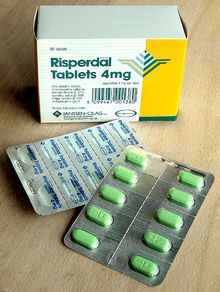
Johnson & Johnson's schizophrenia drug Risperdal. Photographer: JB Reed/Bloomberg News.

A Johnson & Johnson (JNJ) unit was ordered by a South Carolina judge to pay more than $327 million in penalties for deceptively marketing the antipsychotic drug Risperdal as safer and better than competing medicines.

J&J’s Ortho-McNeil-Janssen Pharmaceuticals unit repeatedly violated the state’s consumer-protection laws by sending a 2003 letter to doctors touting Risperdal as superior to rival drugs and including deceptive information in the product’s warning label, Judge Roger Couch in Spartanburg, South Carolina, concluded.

The drugmaker’s executives “allowed the profit-at-all- costs mentality to cloud” their judgment in connection with the drug’s marketing campaign and its labeling, Couch said in his 17-page ruling.

Janssen official said yesterday they’ll appeal Couch’s order and maintained the company fully disclosed Risperdal’s health risks and properly marketed the antipsychotic medicine.

“We don’t believe that the dissemination of an FDA- approved package insert constitutes a violation of the South Carolina Trade Practices Act,” Kara Russell, a spokeswoman for Janssen said in an e-mailed statement. “We do not believe the ruling can be upheld on appeal.”

South Carolina’s lawyers, who originally sued the J&J unit in 2007 for making misleading claims about Risperdal, sought billions of dollars in penalties over the targeted marketing and labeling material.

Sales Decline

Risperdal’s global sales peaked at $4.5 billion in 2007 and declined after the company lost patent protection. The drug generated $3.4 billion in sales in 2008, or 5.4 percent of New Brunswick, New Jersey-based J&J’s total revenue, according to company filings. Sales of the drug fell to $527 million last year, according to a January earnings report.

Risperdal Consta, the long-acting version of the antipsychotic drug, generated $1.5 billion in sales last year for J&J.

The state’s case centered on drug-safety claims that J&J and Janssen made in November 2003 correspondence to about 700,000 doctors across the U.S., including more than 7,000 in South Carolina.

The U.S. Food and Drug Administration responded with a warning letter saying J&J made false and misleading claims that minimized the potentially fatal risks of diabetes and overstated the drug’s superiority to competing products.

South Carolina’s lawyers argued during a two-week trial of the state’s suit that Risperdal’s safety label also downplayed diabetes and other health risks.

‘Clever Effort’

The faulty labels were included in as many as 722,000 Risperdal prescriptions written in South Carolina from 1994 to 2007, the state’s lawyers told Couch at an April hearing. The deceptive information also was presented in 183,144 sales calls on doctors by Janssen drug representatives, and 496,565 sample boxes distributed over that 13-year period, South Carolina’s lawyers argued.

In his ruling, Couch found the Risperdal letter to South Carolina doctors was a “clever effort” to “manipulate the message” about the drug.

He concluded penalties were warranted for 7,180 letters Janssen officials mailed to physicians in the state along with another 36,372 instances in which the drugmaker’s salespeople used the missive to market Risperdal in person, according to court records.

$4,000 per Violation

Couch awarded South Carolina a total of $174.2 million in penalties over the letter based on a rate of $4,000 per violation of the state’s consumer-protection laws, according to his ruling.

He also found 509,499 sample boxes of Risperdal distributed in the state contained labels with deceptive materials that warranted penalties. The judge awarded the state $152.8 million in penalties over the label at a rate of $300 per violation.

J&J’s lawyers claimed in court papers that the state engaged in “triple counting” by seeking to have prescriptions, marketing letters and sales calls on individual doctors included as violations.

Penalizing the drugmaker for multiple contacts with doctors who were allegedly “misled or deceived each time he or she had been exposed to” the targeted information would be unfair, Steven Pugh, one of the company’s attorneys, said in May 3 filing.

Hold Them Accountable

The award puts drugmakers on notice that if they “try to spin information or try to see what they can get away with,” state officials will hold them accountable, Donald Coggins, a Spartanburg-based lawyer who represented the state, said in an interview yesterday.

The case is the third of about 10 state lawsuits to be considered by jurors over J&J’s Risperdal marketing campaigns. In June, J&J won dismissal of Pennsylvania’s suit alleging the company hid the drug’s diabetes risk and tricked regulators into paying millions more than they should have for the medicine.

A Louisiana jury in October ordered the drugmaker to pay $257.7 million in damages to that state for making misleading claims about Risperdal’s safety. A judge later added $73 million in legal fees to the award.

A West Virginia judge in a 2009 non-jury trial awarded $3.95 million, finding the company misled doctors about the risks and benefits of Risperdal. The state dropped its Risperdal claim after J&J won an appeal, company officials said in February.

J&J fell 39 cents to $66.09 in New York Stock Exchange composite trading yesterday. J&J’s 4.95 percent bonds due in 2033 fell 1.36 percent to 102.3 cents on the dollar, according to Trace, the bond-price reporting system of the Financial Industry Regulatory Authority.

The case is State of South Carolina v. Janssen Pharmaceuticals, 2007-CP-42-1438, Circuit Court for Spartanburg County, South Carolina (Spartanburg).

To contact the reporter on this story: Jef Feeley in Wilmington, Delaware, at jfeeley@bloomberg.net; Steven Church in Wilmington, Delaware, at schurch3@bloomberg.net

To contact the editor responsible for this story: Michael Hytha at mhytha@bloomberg.net

This post is subject to the DISCLAIMER AND TERMS OF USE of this website.

Wednesday, March 23, 2011

Jury Reaches Verdict in South Carolina Attorney General's Lawsuit Against Johnson & Johnson

Yesterday I posted an update about the South Carolina Attorney General's lawsuit against Johnson & Johnson and how the case went to the jury for deliberation (and the link to that post is here). The same reporters who provided news coverage about the closing arguments posted another article late yesterday that the jury reached a verdict, and their conclusion was that Johnson & Johnson violated South Carolina's consumer protection laws by sending South Carolina doctors a misleading letter about the safety and effectiveness of the anti-psychotic drug Risperdal.

A link to the article can be found here, and a cut and paste of it is below. (Thanks again to Bloomberg.com and these reporters for the coverage).

J&J’s Risperdal Letter Violated Consumer Law, Jury Finds


By Jef Feeley and Gary Henderson - Mar 22, 2011 7:23 PM ET

A Johnson & Johnson (JNJ) unit violated consumer-protection laws by sending South Carolina doctors a misleading letter about the safety and effectiveness of the antipsychotic drug Risperdal, a jury concluded.

Jurors in state court in Spartanburg, South Carolina, deliberated more than six hours before finding today that J&J’s Ortho-McNeil-Janssen Pharmaceuticals unit engaged in “unfair and deceptive acts” by sending a 2003 letter touting Risperdal as better and safer than competing drugs to more than 7,000 doctors across the state. A judge will decide later whether the drugmaker should pay $360 million in penalties over the mailings.

“The verdict they handed down is just and speaks the truth,” John White, a Spartanburg-based lawyer representing the state, said in an interview. Jurors also found that J&J warning label information on Risperdal was deceptive.

The state’s case centered on drug-safety claims that New Brunswick, New Jersey-based J&J and Janssen made in November 2003 correspondence to about 700,000 doctors across the U.S., including 7,200 in South Carolina.

The U.S. Food and Drug Administration responded with a warning letter saying J&J made false and misleading claims that minimized the potentially fatal risks of diabetes and overstated the drug’s superiority to competitors’ products.

‘Acted Responsibly’


“We are disappointed,” Greg Panico, a J&J spokesman, said in a statement. “Janssen acted responsibly and believes it did not violate” South Carolina law, he said.

South Carolina officials argued in the case that J&J sent the letter to protect billions of dollars in sales of the antipsychotic drug.

Risperdal’s global sales peaked at $4.5 billion in 2007 and declined after the company lost patent protection. Risperdal generated $3.4 billion in sales in 2008, or 5.4 percent of J&J’s total sales, according to company filings. Sales of the drug fell to $527 million last year, J&J said in a January earnings report.

Risperdal Consta, the long-acting version of the antipsychotic drug, generated $1.5 billion in sales last year for J&J.

The case is the third of about 10 state lawsuits to be considered by jurors over J&J’s Risperdal marketing campaigns. In June, J&J won dismissal of Pennsylvania’s suit alleging the company hid the drug’s diabetes risk and tricked regulators into paying millions more than they should have for the medicine.

Louisiana Verdict


A Louisiana jury ordered the drugmaker in October to pay $257.7 million in damages to that state for making misleading claims about Risperdal’s safety. A judge later added $73 million in legal fees to the award.

A West Virginia judge in a 2009 non-jury trial awarded $3.95 million, finding the company misled doctors about the risks and benefits of Risperdal. The state dropped its Risperdal claim after J&J won an appeal, company officials said in February.

Under South Carolina’s unfair trade practices law, Janssen can be fined as much as $5,000 for each Risperdal letter sent to South Carolina doctors. Judge Roger Couch will decide the financial-penalty issue after an April 18th hearing.

“After the judge makes a determination as to damages, we will consider our options,” Panico said in his statement.

The case is State of South Carolina v. Janssen Pharmaceuticals, 2007-CP-4201438, Circuit Court for Spartanburg County, South Carolina (Spartanburg).

To contact the reporters on this story: Jef Feeley in Wilmington, Delaware, at
jfeeley@bloomberg.net ; Gary Henderson in Spartanburg, South Carolina at wgaryh@gmail.com .

To contact the editor responsible for this story: David E. Rovella at
drovella@bloomberg.net .

This post is subject to the DISCLAIMER AND TERMS OF USE of this website.