Friday, September 13, 2013

Verdict Survey: $38 Million Asbestos Verdict in Richland County

About two weeks ago, I saw my friend Theile McVey at Starbucks.  She mentioned in our general chit-chat that she was in trial.  As shop talk usually goes, I asked her what kind of case it was, and she said it was an asbestos case.  Apparently, it went pretty well.  I don't have much in terms of details and will try to update this post if/when I get more information, but for now, John Monk at The State Newspaper did a nice article today, which can be found here and is cut and pasted below.  (I added in a few hyperlinks for additional information).

Richland County jury awards $38 million in asbestos case
Published: September 12, 2013 Updated 12 hours ago
By JOHN MONK — jmonk@thestate.com
A Richland County jury has awarded a Wagener equipment worker and his wife $38 million in damages for health problems linked to exposure to asbestos.
Following a 21/2-week trial, the jury awarded plaintiff Lloyd Strom Garvin, 74, $10 million in actual damages and another $1 million in actual damages to his wife of 50-plus years, Velda Garvin, for loss of consortium.
The jury also ordered defendants Durco and Crane Co. to pay $11 million each in punitive damages to Lloyd Garvin. It ordered a third defendant, Byron Jackson, to pay $5 million in punitive damages.
A spokesman for Crane said Thursday the company will appeal. Among possible grounds for appeal are “no credible evidence” and excessive and unwarranted jury awards, said TerryBudd, a Pittsburgh lawyer who represents Crane.
“The verdict is flawed,” Budd said. “We’re definitely appealing.”
Efforts to reach Charleston attorney Tim Bouch, who represented Durco and Byron Jackson during the trial, were unsuccessful Thursday.
Durco, Byron Jackson and Crane are major companies that manufacture pumps and valves. Garvin contended his years of exposure to their asbestos-containing gaskets and packing in valves and pumps that he used in factory and farm work caused him to develop mesothelioma, a rare form of cancer that plaintiffs said was nearly always caused by asbestos exposure.
The jury was out some four hours and returned a final verdict around 9 p.m. Wednesday night. Circuit Judge Garrison Hill of Greenville presided.
Originally, Garvin’s lawsuit named 13 defendants, but most had been dropped or settled by the time the trial began Aug. 26.
Garvin’s lawyers, Jessica Dean of Dallas and Theile McVey of the Columbia firm Kassel McVey, argued at trial that defendants Crane, Durco and Byron Jackson used asbestos in their products, should have known about its dangers and failed to take action to warn and protect people like Garvin who work around their products.
Garvin’s testimony and cross-examination during trial was presented to the jury by a video recording displayed on a large courtroom screen.
He is currently recovering from double pneumonia. His lawyers contended at trial that he has less than a year to live because of his cancer.
During closing arguments, Garvin’s attorney Dean asked the jury to award $1 million in actual damages for each year of life that Garvin was expected to miss because of his fatal disease. Garvin’s life expectancy would have been another 10 to 11 years, she argued.
Attorney Robert Meriwether of the Columbia firm Nelson Mullins and Bouch were the defendants’ attorneys during trial.
According to a complaint in 2012 action, some of Lloyd Garvin’s exposure to asbestos-containing equipment and products came in Wagener while working on his family farm, as well as while working as a heavy equipment operator in West Columbia and Aiken.
The trial took place in Richland County because the complaint, filed in 2012, alleged some of the exposure had a Richland County connection.
Reach Monk at (803) 771-8344.
This post is subject to the DISCLAIMER AND TERMS OF USE of this website.

Wednesday, August 7, 2013

Motion in Limine Order in Quinton v. Toyota Addresses Crashworthiness in Modern Era


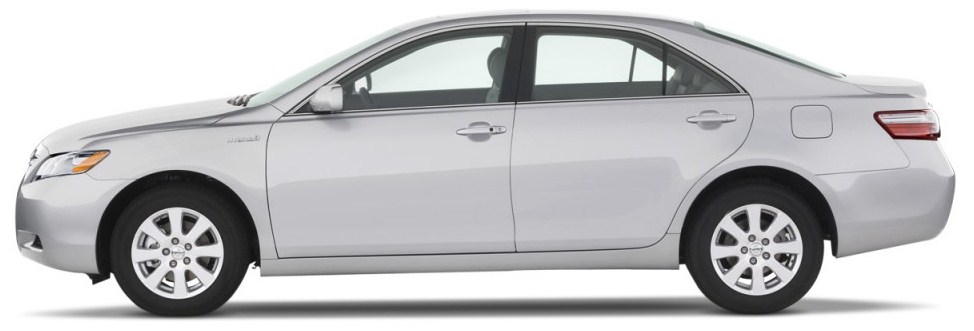
Earlier this week, I blogged about a recent trial of a Toyota Camry rollover case, which resulted in a defense verdict on June 21, 2013.  Prior to the trial, the Court issued a pre-trial Order in response to a motion in limine filed by Plaintiff's counsel.  The Order can be found here, and it is worthy of further commentary because it addresses crashworthiness in South Carolina.  It also references recent case law in which our courts have hinted at moving toward the Restatement (Third) of Torts: Products Liability (1998).  So...let's take a closer look.

To re-cap, the general facts relating to Quinton v. Toyota Motor Corporation can be found in this post.  Generally, the case involved a rollover of a 2009 Toyota Camry that resulted in the death of the driver (and sole occupant).  As stated in the Order, Plaintiff brought the case under the crashworthiness doctrine because she alleged the air bag failed to deploy properly during the accident. (Order at 2).  As a result, she claimed "enhanced injury" when the accident occurred, resulting in the death of the driver.  (Id).  Therefore, prior to trial, Plaintiff moved to exclude all evidence related to causation or fault. 

The Court began by summarizing prior South Carolina case authority on the crashworthiness doctrine.  Quoting from the Fourth Circuit Court of Appeals decision in Jiminez v. Daimler Chrysler Corp., 269 F.3d 439, 452 (4th Cir. 2001), the Court noted that "'liability [in a crashworthiness case] is imposed not for defects that cause collisions but for defects that cause injuries after collisions occur.'"  (Order at 2) (quoting id.).  In Jiminez, the district court excluded evidence of causation in a crashworthiness case.  The defendant had argued that because South Carolina adopted comparative negligence, the driver's alleged negligence was relevant to a damages calculation.  In concluding that the district court committed no error, the Jiminez Court noted that South Carolina had not addressed the issue of whether causation was relevant in a a crashworthiness analysis, and there was a split of authority on the issue.  Although the Court was not certain what the rule would be in South Carolina, it could not conclude that the the district court had erred in light of the fact that -- under the crashworthiness doctrine -- the cause of the original accident was not relevant to proving a claim for enhanced injury.  (Order at 2-3). 

Since Jiminez, the Court recognized that South Carolina courts still have not directly addressed this issue.  The Court offered to certify the question to the South Carolina Supreme Court, but the parties declined.  Therefore, the Court tried to ascertain how South Carolina courts would rule on it.  (Order at 3).

The Court reviewed that Branham v. Ford Motor Co., 390 S.C. 203, 220, 701 S.E.2d 5, 14 (2010) "embraced the Restatement (Third) of Torts: Products Liability (1998)."  (Order at 3).  Noting this trend, the Court cited to the comments in Restatement (Third) section 16 and the notion that a plaintiff's fault in causing an action that causes defect-related increased harm is relevant to apportioning responsibility.  (Order at 3-4) (emphasis added).  The Court noted that Jiminez did not hold that South Carolina would not admit evidence of cause in a crashworthiness analysis.  Rather, Jiminez only concluded there was no error by the district court under then-existing South Carolina law.  (Order at 4).

Since Jiminez, the Court noted that South Carolina has adopted comparative negligence, and its Supreme Court cited Restatement (Third) and its comments with approval in Branham.  (Order at 5).  The Court also noted that a majority of jurisdictions that considered the issue have held that comparative negligence is appropriately considered in a crashworthiness case.   Finally, the Court cited to language in Jiminez's dissent to support that a jury has to assess behavior of both the plaintiff and the defendant in a crashworthiness case to determine causation. The Court also agreed that the evidence was relevant to the analysis and conclusions of the experts accident reconstruction.  (Id.). 

The Order continues to show what this blog has maintained in numerous posts: Branham was a "game changer" in South Carolina products liability law.  Whether it leads to a definitive adoption of the Restatement (Third) of Torts: Products Liability (1998) by the Legislature remains to be seen, although our Legislature also made those overtures during the last round of tort reform.  We'll see...

This post is subject to the DISCLAIMER AND TERMS OF USE of this website.

Monday, August 5, 2013

Verdict Survey: 2009 Rollover of Toyota Camry in Aiken County


On June 21, 2013, a jury returned a defense verdict in a rollover case tried in United States District Court, Aiken Division.  The details of the case are set forth below.

Capsule Summary: On June 21, 2013, a jury returned a defense verdict in a case involving a fatal rollover event in a 2009 Toyota Camry.  The driver's personal representative for the estate brought a wrongful death suit against multiple defendants, alleging claims for strict products liability, breach of warranty, and negligence.

Case Information: Alacia C. Quinton as PR for the Estate of April Lynn Quinton, Plaintiff, v. Toyota Motor Corporation; Toyota Motor Sales U.S.A., Inc.; Toyota Motor Engineering and Manufacturing North America, Inc., Toyoda Gosei North America Corporation, Defendants, C/A No.: 1:10-cv-02187-JMC.

Date of Verdict: June 21, 2013

Venue: United States District Court, District of South Carolina, Aiken Division

Judge: The Honorable J. Michelle Childs

Factual Background: On October 14, 2009, April Lynn Quinton was driving a rented 2009 Toyota Camry in Aiken, South Carolina.  She lost control of the vehicle while driving north into a left-hand curve.  The car exited the road, struck an embankment, and rolled over several times before coming to rest on its wheels.  Ms. Quinton was partially ejected and suffered severed head injuries from which she never recovered.  She died on October 23, 2009.

Allegations and Procedure: Plaintiff filed a wrongful death and survival action against Defendants in the Aiken County Court of Common Pleas.  In the Complaint, Plaintiff asserted claims for strict products liability, breach of warranty, and negligence.  Plaintiff alleged the vehicle's roof structure and seat belt restraint system were defective generally.  Plaintiff also alleged that the supplemental restraint system, which involved certain airbag technology, was defectively designed.   More specifically, the 2009 Toyota Camry's supplemental restraint system included a curtain shield airbag ("CSA").  This system deploys above the vehicle's doors to protect a passenger's head from side impacts.  Plaintiff alleged that the vehicle lacked a rollover-activated curtain shield airbag ("RCSA").  This system, which was not included in the 2009 vehicle, has a rollover sensor that deploys the curtain shield airbags when it senses the car is rolling over.

Defendants removed the case to the United States District Court of the District of South Carolina, Aiken Division.  Defendants answered the Complaint and later filed a motion for summary judgment.  The Court granted the motion with regard to Plaintiff's claims relating to a defective roof and defective seat belt restraint system.  However, it denied summary judgment on Plaintiff's claim of a defectively designed supplemental restraint system.

At trial, the primary liability theory remaining and asserted by Plaintiff was the claim that the driver's side airbag failed to fully deploy.  Plaintiff alleged this failure was the result of a hole in the airbag during manufacture (i.e., manufacturing defect).  Defendants demonstrated that the hole found in the airbag post-accident was created during the severe four-roll rollover event as the bag was constrained and over-pressurized.  In addition, the defendants presented evidence of the Quality Assurance/Quality Control procedures followed a the non-party manufacturers. 

Experts: Plaintiff presented the following experts: Ron Kirk (accident reconstruction), Robert Bowser (airbag design), Richard Edwards (materials science), and Joe Burton (biomechanics).  Defendants presented the following experts: Geoff Germane (accident reconstruction), Bob Gratzinger (roof structure), Mike Klima (airbag design), Karen Balavich (airbag/materials science) and Catherine Corrigan (biomechanics).

Alleged Damages: Plaintiff asked for $5 million.

Result: After four hours of deliberation, the jury returned their verdict in favor of the defendants.

Miscellaneous: This case also involved some pre-trial motions, one of which was a motion in limine by Plaintiff to exclude all evidence related to accident causation or fault.  I will try to post the Court's Order on that motion later in the week, as it provides some interesting insight into our state's movement toward Restatement (Third) of Torts: Products Liability (1998) and crashworthiness.  Also, special thanks to my friends and former colleagues, Dick Willis and Angela Strickland, for calling this case to my attention.  Dick and Angela were on the defense trial team for this case.  They were also kind enough to present the case at our products liability breakout session at the South Carolina Defense Trial Attorneys Association Summer Meeting a couple of weeks ago.

This post is subject to the DISCLAIMER AND TERMS OF USE of this website.
Monday, July 29, 2013

SCDTAA Panel on Expert Retention at Summer Meeting

Last Friday, I had the opportunity to serve on a panel at the annual summer meeting of the South Carolina Defense Trial Attorneys Association  ("SCDTAA").  For the last couple of years, I have served as a Co-Chair of the organization's Products Liability Substantive Law Committee, and this role has afforded me the opportunity to become more involved in SCDTAA.  Although I was only able to go up for the day, the meeting occurred from July 25 to July 27, 2013 at the Grove Park Inn in Asheville, North Carolina.  (This was my first time going to the Grove Park Inn...I will definitely go back, as it is a beautiful setting).

I was originally contacted earlier this year about serving on this panel.  The idea was to get three or four different lawyers who handle different types of cases, and bring the perspectives of those practice areas to a discussion about best practices when dealing with experts.  After some discussion, I was designated to speak on products liability on the panel, Blanton O'Neal handled the perspective from construction litigation, and Trey Suggs handled medical malpractice.  Ron Wray moderated the panel, and our time lot was 11:15 a.m. to noon on Friday.

It was a nice discussion, and we had a good crowd of probably forty to fifty lawyers in attendance.  Generally, we spoke about issues relating to hiring national versus local experts, "professional" experts versus practicing specialists, expert preparation, and a variety of other issues that every practitioner has to address when dealing with experts.  From the products liability perspective, I discussed how experts have become more important in this practice area in the last few years in light of Watson v. Ford Motor Co., Graves v. CAS Medical Systems, Inc., and our courts' definitive decision to require proof of alternative design in design defect cases (which is -- in my opinion -- difficult to prove without engaging an expert).  If you follow this blog, you are familiar with these issues and case law, as I have blogged extensively about them over the last few years.

I always enjoy speaking, and the SCDTAA is a great organization if you do defense work in South Carolina.  If you have any interest in becoming more involved in SCDTAA generally or the Products Liability Substantive Law Committee, I would be happy to discuss the organization with you.

Thursday, June 27, 2013

Just Returned from the DRI Products Liability Steering Committee Fly-In Meeting


I just returned from the yearly "fly-in" meeting of the DRI Products Liability Steering Committee.  This is an annual meeting in June where members of the committee get together to discuss and plan the next year's Products Liability Conference.  It is a productive meeting, and it is also a chance to get together with friends on the committee and catch up in between conferences. 

Go ahead and mark your calendar for the 2014 DRI Products Liability Conference, which is scheduled for April 9-11, 2014 at the Arizona Biltmore in Phoenix, Arizona.  There are going to be a few format changes for the 2014 conference.  The most significant change (for me) is that the Specialized Litigation Group ("SLG") that I chair -- Agricultural, Construction, Mining and Industrial Equipment -- is scheduled to do a one-hour "main stage" presentation.  In the past, the SLGs have done breakout sessions.  This year, certain SLGs are being asked to provide a main stage presentation, and ACMIE is one of them.  I need to submit our topic by July 9, so if you have any ideas and care to share them, let me hear from you!

We also discussed  other topics for the conference, general themes, and membership matters.  We also had an interesting discussion on future venues and how to respond to participant feedback in terms of programming, the preferred month for the conference (as April seems to run into spring break for many people), venue, etc.  It was a productive meeting, and now that I have been involved with this group for four or five years, I have made some good friends and enjoyed the opportunity to catch up with them. 

Unfortunately, my travel home was brutal.  Storms in Chicago, and a missed connection in Charlotte led to a 1:00 a.m. arrival, as opposed to the planned 9:30 p.m. arrival.  But, it is always good to get home.

If you have any interest in DRI, please let me know, as I would be happy to assist with getting you involved. 

Tuesday, June 18, 2013

Verdict Survey: Tankless Water Heaters in Dorchester County

The May 2013 issue of Verdict Search included a South Carolina products liability case tried in Dorchester County.  The details of the case are set forth below.

Capsule Summary:   On March 1, 2013, a Dorchester County jury returned a verdict in favor of the plaintiff for $750,000 in a case involving tankless water heaters purchased by the plaintiff plumbing company.  Plaintiff alleged the tankless water heaters it purchased failed once temperatures began to drop in the winter, causing water pipes in the homes in which they were installed to burst. 
 
Case Information: Amo, LLC v. Eccotemp Systems, LLC, Greenwave Hot Water Heaters, LLC/Eccotemp Systems, LLC v. Hurricane Construction, Inc., C/A No. 2010-CP-18-01920, Dorchester County Court of Common Pleas.
 
Date of Verdict:  March 1, 2013


Factual Background:  In 2008, Plaintiff Amo, LLC (“Amo”) (a plumbing company) purchased 75 tankless water heaters and installed them in various homes.  Amo purchased the units from Eccotemp Systems, LLC (“Eccotemp”).  The water heaters were supposed to produce warm water on demand and conserve energy.  They were also allegedly 30 to 40 percent less expensive than the price of competitor products that were similar.  Amo paid $498 per unit.  In the winter of 2008, and as temperatures began to fall, the units Amo purchased began to fail and caused water pipes in the homes in which they were installed to burst. 
 
Allegations and Procedure: Amo sued Eccotemp and claimed Eccotemp manufactured and sold a defective product.  Amo alleged causes of action for breach of warranty, breach of contract, and violation of the South Carolina Unfair Trade Practices Act.  Amo also named the retailer that sold the water heaters, but the retailer was dismissed later by Plaintiff’s counsel.  Eccotemp then impleaded Hurricane Construction, Inc. (the homebuilder) for whom Amo installed the units, but Hurricane was dismissed from the case prior to trial.
 
At trial, Amo's counsel argued Eccotemp’s products included broken thermostats, which caused water pipes to freeze.  The thermostats also caused the units to malfunction and not heat water inside the units if temperatures dropped below 37 degrees fahrenheit.   There was testimony at trial that 70 percent of units sold to Amo by Eccotemp failed.  Eccotemp replaced 40 of the units, and 14 of them froze again.  Amo's counsel argued that several homeowners experienced as many as three Eccotemp water heater failures in their homes during the cold months.  When Amo replaced the Eccotemp units with a competitor’s units, those units did not fail.  Amo introduced evidence of a pattern of behavior by Eccotemp, including evidence that homeowners in several states had similar problems with the water heaters.
 
Eccotemp argued that the products' failure was not the result of a product defect.  Instead, it argued Amo's employees installed the units in the homes incorrectly.  Eccotemp also claimed the homeowners contributed to failure of the units and frozen water pipes by not allowing their pipes to drip during cold weather.
 
Experts: Amo's expert was Gary Roland, a plumber in Lexington, South Carolina.  Defendant’s expert was Michael Richmond, a plumber in Charleston, South Carolina. 
 
Alleged Damages:  Amo's counsel sought a recovery of $158,000, as well as attorney’s fees and costs.  Amo's counsel requested that the damages be trebled pursuant to the South Carolina Unfair Trade Practices Act.  Defendant’s counsel disputed these damages.
 
Result: The jury returned a Plaintiff’s verdict, in favor of Amo and determined the damages for breach of warranty, breach of contract, and unfair trade practices totaled $750,000.  The jury apportioned $125,000 to breach of warranty, $158,000 to breach of contract, and $474,000 to the unfair trade practices claim.
 
Miscellaneous:  The last demand in the case was $85,000.  The last offer was $42,500, which the write-up indicates was withdrawn.  After the verdict, Eccotemp filed a motion for a mistrial, which was denied.  Eccotemp filed a Notice of Appeal with the South Carolina Court of Appeals and also filed for United States Bankruptcy Chapter 11 bankruptcy protection.  The write-up indicates the information contained therein was provided by Plaintiff’s counsel, and none of the Defendants’ counsel responded to inquiries.
 
Thanks to the May 2013, Volume 12, Issue 5 of Verdict Search for this information.  I also frequently use their verdict search engine, www.verdictsearch.com.

 This post is subject to the DISCLAIMER AND TERMS OF USE of this website.

Monday, June 17, 2013

CLE for ACC-South Carolina Chapter was a Success


My firm is a proud sponsor of the Association of Corporate Counsel - South Carolina Chapter, and I am the firm's primary liaison for this group.  Last Friday, we conducted a three-hour continuing legal education seminar for the chapter, and I am happy to say that it went off without a hitch.
 
My partners Christian Stegmaier and Rebecca Halberg presented on ethics in mediation.  Joey McCue presented on unconscionability in contractual provisions and leveraged from his experience in the recent South Carolina Supreme Court case of Gladden v. BoykinTom Bacon presented on management of workers compensation claims.  We also had Otis Rawl from the South Carolina Chamber of Commerce join us.  He was kind enough to provide an overview of South Carolina's current business climate and the most recent legislative session.

The picture above is of yours truly and was taken during my presentation: "How Did You Arrive at that Number?  Objective and Quantitative Methods for Case Management and Evaluation."  As I told our group, I had an experience in my first or second year of practice where a client asked me how I arrived at a certain settlement figure for a case.  When my answer failed to provide any real process, I could tell that my client was "less than impressed."  In other words, it was not apparent that I was adding any real "value" to the case.

Since that time, I have taken an interest in how to evaluate a case and how to use a process to arrive at exposure, settlement value, etc.  I finally had an opportunity to put it together in this presentation, and I enjoyed sharing it with our ACC attendees.  Recently, I heard a speaker say, "All trial is theater."  I think there is a lot of truth to that statement, so I arranged the presentation so as to approach case evaluation from the standpoint of a broadway play: the stars of the show, supporting case, directors, stage, etc.  The picture above profiles two very different plays: "Phantom of the Opera" (considered by many to be the standard of excellence in terms of theater) and "Moose Murders" (widely considered to be the standard of awfulness, as it was shut down after one performance).  As I told the crowd, is your case a "Phantom of the Opera," or is it a "Moose Murders"?  We then went into the variables that can assist with this determination.  It was a fun presentation to put together, and I may convert it to an article in the future.

Thanks to all of my colleagues and Otis Rawl for their diligence in putting together this CLE!


Tuesday, April 16, 2013

DRI Products Liability Conference De-Brief

I returned from the DRI Products Liability Conference on April 5th, and I am just now getting around to blogging about it.  This was my fourth conference, and my (and I believe DRI's) first at Gaylord National Resort (picture to the right) in National Harbor, Maryland. 

From a programming and speakers standpoint, the conference was fantastic.  The conference had an interactive mock trial component that allowed the audience to provide feedback during voir dire and closing argument demonstrations, and the case fact pattern was incorporated into numerous other presentations. 

I am proud to say that the Agricultural, Construction, Mining and Industrial Equipment ("ACMIE") Specialized Litigation Group ("SLG") breakout session went very well, and we got great feedback on the presentations from our attendees.  I am not sure if it is the breadth of our subject matter or the thoughtful speakers we have each year, but our SLG always has a heavy turnout of attendees.  This year was no exception.   We probably had 80 to 100 people.  I also attended the Consumer Products SLG to hear my friend and former colleague, Steve Morrison, speak.  As always, he did a fantastic job.

In terms of networking....a very different story for yours truly.  On the Monday prior to the conference, I got the "mother of all stomach bugs" and stayed out of work.  On Tuesday, I awoke feeling like I was on the mend, and I flew to the conference.  It only took about a day to realize I was not on the mend, and by Thursday I was crawling into my hotel bed.  So...in short, it did not make for a great social experience.  I managed to attend most of the CLE segments, and I was even able to catch up with some friends over a dinner or two.  But, I doubt I was good company.  Luckily, since the conference was on the east coast this year, my direct flight back had me home earlier than usual on Friday. 

Nonetheless, special thanks to Anne Talcott and James Weatherholtz, this year's Chair and Vice-Chair for the conference, who did an outstanding job.  I liked the site, and even though I was a bit out of sorts with my stomach funk, I thought conference was fantastic.  I am looking forward to next year's conference, and I have taken over the reins of the ACMIE SLG as the Chair, with Mike McWilliams serving as my Vice-Chair.  Special thanks to J.K. Leonard for serving as our Chair for the last two years.  J.K. was always on top of things, so I have some big shoes to fill.  If you have any interest in getting involved in our SLG, please let me know.