Monday, August 1, 2011

Passing of the Honorable Matthew J. Perry, Jr.

I was saddened to learn of the passing of U.S. District Judge Matthew J. Perry, Jr. over the weekend.  Approximately one year ago to the day, I tried a products liability case before Judge Perry that lasted a couple of weeks.  During that time, I had the opportunity to get to know Judge Perry, see him interact with the attorneys and the jury, and generally watch him run his courtroom.  He was a true gentleman and an icon in South Carolina's history.  I saw him again a few months ago while shopping for groceries and had the opportunity to reminisce with him about our case and how he was doing. 

Judge Perry had an almost "regal" air about him.  He was a delight to be around, but also had the ability to strike fear in even the most seasoned lawyer with his booming voice and his ability to get his point across in as few words as possible.  I cannot say that I knew him "well," but I feel lucky to have had a chance to try a case before him toward the end of his storied career.  He will be missed.

Thursday, July 28, 2011

South Carolina Tort Reform: Governor Nikki Haley Signs Bill Capping Punitive Damages Into Law

On Tuesday, Governor Nikki Haley signed into law the tort reform bill passed by the South Carolina State Legislature earlier this year.  The bill includes numerous provisions relating to punitive damages that I blogged about as it was debated earlier this year.  The Charleston Regional Business Journal did a nice write-up yesterday about the signing of the bill and impressions of the bill by members of the South Carolina business community.  The article can be found online here, and a cut and paste is below.

Haley signs tort reform law, creating punitive damages cap

By James T. Hammond
jhammond@scbiznews.com
Published July 27, 2011

Gov. Nikki Haley signed changes to South Carolina civil litigation laws on Tuesday, including a $2 million cap on punitive damages that she said was long overdue.

According to the S.C. Chamber of Commerce, which had sought the changes, the new law includes a cap on punitive damages modeled after the state of Florida. The legislation caps punitive damages greater than $500,000 or three times the compensatory damages awarded.

However, if the court finds a defendant is motivated primarily by financial gain or a defendant’s actions rise to the level of felony charges, then the award can be in­creased to the greater of $2 million or four times compensatory damages.

If it is proven the defendant intended to harm the claim­ant, was convicted of a felony arising out of the same act or acted under the influence of drugs or alcohol, there is no cap for punitive damages.

S.C. Chamber of Commerce President Otis Rawl said passage of the tort reform law was his organization’s No. 1 priority this year. The changes in the law were not everything the chamber wanted, Rawl said, but he added that the legislation was a good compromise.

“We were the only state in the Southeast without a punitive damages cap,” said Rawl, adding that until now, that status had been a competitive disadvantage in recruiting new businesses to the state.

Haley agreed that the lack of such a provision hurt recruiting of industries.

“It automatically became a topic of conversation,” Haley said. “This was very simple. This was a vote either for business or for trial lawyers.”

Haley said tort reform remains a work in progress. She wants provisions added to the law that would require losers in civil litigation to pay the costs of the trial.

She said she thinks the changes create a “fair balance in our state,” while still permitting citizens their day in court.

Harry Lightsey, a Columbia attorney who worked for passage of the civil litigation changes, said the tort reform bill was the culmination of efforts that began in 2003.

“In 2003, Hampton County was recognized as a litigation hell hole,” Lightsey said, referring to a South Carolina county that had become notorious for its generous civil lawsuit awards to plaintiffs.

“Businesses large and small came together to change that,” Lightsey said, adding, “the governor was the difference-maker this year.”

Haley also said the new law represented a just compromise between two extremes.

“The House had a $350,000 cap on punitive damages. I’d like to have seen that happen,” Haley said. “But the original Senate version had no cap at all.”

Louis Gossett, president of the S.C. Manufacturers Alliance, said tort reform remains a work in progress.

“We’re always going to be working on this,” Gossett said. “We’d like loser-pay. What tort reform is about is certainty; it’s about stability. There is a place for litigation in our society. But there must be consequences for frivolous acts.”

As far as who decides what is frivolous, Gossett said, “That’s a good question. Probably the General Assembly and the courts.”

South Carolina Tort Reform: Quotation in South Carolina Lawyers Weekly Article


I did numerous blog entries earlier this year about my involvment in South Carolina's debate and passage of tort reform in the General Assembly.  I failed to blog about it, but I was recently quoted in South Carolina Lawyers Weekly about the bill that was ultimately passed.  My colleague at Collins & Lacy, P.C., Gray Culbreath, was also quoted.  A cut and paste of the article is below.

Not all tort-related wishes come true 

by Caitlin Coakley

Published: July 1st, 2011

Looking back on the past legislative session, attorneys mostly see just one bill: HB 3375, the S.C. Fairness in Civil Justice Act – commonly called the tort reform bill.

Pushed by business groups and conservatives in the legislature, the bill imposes caps on punitive damages to be awarded in tort cases, with some exceptions. It gave Mike Hemlepp, executive director of the South Carolina Association for Justice, a big case of heartburn. As part of an organization that represents trial lawyers, Hemlepp said that he and his group are, on principal, opposed to tort reform and caps of any kind.

“We trust juries,” he said. “Anything that interferes with a jury’s ability to make a judgment, we are opposed to it.”

But with the bill signed into law, Hemlepp is less venomous and more resigned to the new laws. Despite his fundamental opposition to the goal of the bill, he recognizes that the lawyers his organization represents could have gotten off a lot worse.

On the other side of the issue, the defense attorneys say the new law is a good start, but wasn’t as effective as it could have been. Gray Culbreath, president of the South Carolina Defense Trial Attorneys’ Association, said that the bill is a good one, “as a matter of perspective.”

“We have caps now, and we didn’t have any before,” he said. “There is a belief that something’s better than nothing.”

Those mixed feelings are perhaps a reflection of the compromise between the bill introduced in the House of Representatives and the bill that passed the Senate. The House’s original hill was much stricter: a $350,000 across-the-board cap on punitive damages with no exemptions.

But by the time the bill hit the governor’s desk, the punitive-damage caps were more fluid: $500,000 or no more than three times the compensatory damages for most cases, rising to $2 million or four times compensatory damages in cases where the jury ruled that the business or person cut corners in order to rake in an unreasonable profit or if the defendant, business or individual, committed a felony in the process. If the defendant is actually convicted of a felony, caused harm intentionally, or was under the influence of drugs or alcohol, the case is exempted from caps altogether.

The amending and softening that the bill underwent while making its way through the legislative chambers made it into something that Hemlepp begrudgingly admits isn’t too bad.

“I think the legislature did a very good job of educating themselves on something that was very complicated,” he said. “We don’t believe in caps of any kind, but what was passed in this bill is reasonable compared to other states.”

But defense attorneys like Culbreath can’t help but lament some of the things that it left out.

One provision included in the original bill would have overturned a South Carolina statute that disallows information about whether the plaintiff in an automobile accident was wearing a seatbelt.

In the Senate, that provision was taken out, but Culbreath said that the some trucking and manufacturing associations to whom he had spoken have said they wished it had been retained.

Brian Comer, a Columbia attorney who worked with the legislature on the proposed product liability aspects of the bill, also acknowledged that the bill has been watered down from its original form. However, he adds that if the alternative would be to not have anything pass, the new law is enough.

“It’s a compromise,” he said. “It does some good things, there are some things that could have been done, but overall there was something done.” In fact, Comer was happy that  he and other product liability attorneys were successful in keeping the bill from being watered down any further.

The legislature briefly considered adding an amendment that would overturn the August 2010 ruling in Branham v. Ford Motor Co., which created the “feasible design” standard: In cases that alleged a company created a defective product, a plaintiff must demonstrate that the company could feasibly have manufactured a safer product.

Had the case been overturned, the plaintiff would only have to prove that the product did not live up to consumer expectations.

Comer said that the issue is one that deserves another look, but should be considered as a separate issue and not as an amendment to a larger bill.

“We aren’t necessarily averse to doing that, but it needs to come at the end of a debate involving members of bar and academic community,” he said. “It shouldn’t be something that happens at the eleventh hour.”

Even Hemlepp acknowledges that the bill wasn’t completely devastating to trial lawyers. The SCAJ successfully added a provision to the bill that prohibits award caps from being disclosed to the jury. By keeping the jury in the dark as to the award caps, it left the jurors to determine what a fair award would be. Under the bill, if the jury’s punitive damage award exceeds the cap, the plaintiff would get the maximum amount allowed by law.

C. Stuart Mauney, a defense trial lawyer in Greenville, said that even if the bill wasn’t everything the business community hoped for, it accomplished the ultimate goal of sending the message that South Carolina was making an effort to become more business friendly.

Having the caps in place, Mauney said, “creates a more positive business climate. When executives make decisions about whether or not to do business in South Carolina, they make the decisions in part based on the state’s lawsuit environment.”

But Terry Haselden, a Spartanburg attorney who handles tort cases, said the bill isn’t good for much else. He calls it a “feel-good bill” that lawmakers can crow about to constituents but doesn’t have much practical impact, since “punitive damages are extremely rare in South Carolina.”

The cases where the cap will come into play, he said, will be the most tragic ones where people are most severely hurt and the jury believes that the plaintiff deserves a higher sum – in other words, he said, the ones that deserve it the most.

“Juries in South Carolina are extremely conservative,” he said. “They rarely award punitive damages unless there’s a darn good reason.”

Friday, July 15, 2011

Upcoming Webinar: "Warnings - Scope of and Exceptions to Duty to Warn"

My firm is a member of the Primerus network of law firms, and on July 21, 2011 at 2 p.m. ET, I am going to be presenting in a webinar entitled "Warnings - Scope of and Exceptions to Duty to Warn."  I am one of three speakers who will be discussing the various limitations on the duty to warn in a products liability case.  We anticipate that the webinar will last between an hour and an hour-and-a-half.  It will include a powerpoint presentation of the various topics discussed, and my co-presenters include Rick Quinlivan and John Brydon.  Both of these gentlemen also have extensive experience in products liability cases and warnings cases (in particular).

I have written numerous blog posts and articles about South Carolina's limitations on the duty to warn , so this is a topic that is fairly familiar to me.  (See, e.g., this post, this postthis article, and this article).  This webinar takes a more general, national approach to this topic so as to provide the audience with some high-level guidance for application in various jurisdictions.

Although I try to keep this blog fairly "even keel" in terms of plaintiff and defense themes/perspectives, this webinar is presented as part of the Primerus Defense Institute, so it is primarily focused on defense strategies in a warnings case.  If you are interested in registering for this webinar, go to this link for more information.  I hope you will join us for what should be an informative presentation.

Thursday, July 14, 2011

Drilling Down: Spoliation of Evidence

On June 20, 2011, the South Carolina Supreme Court filed its opinion in Cole Vision Corp. v. Hobbs, No. 26988, 2011 WL 2447090 (S.C. June 20, 2011) (you can find it online at this link, page 30).  This case is a medical malpractice case, not a products liability case.  Therefore, I am not going to do a "Case Brief" of the opinion.  However, it is significant because the court deals with whether South Carolina recognizes a claim for negligent spoliation of evidence.  After reading the case, and after reflecting on my own experience in products cases with spoliation, it seemed like a good topic for a blog post.  So hear we go. 


What is South Carolina's general law with regard to spoliation of evidence between parties?

A party has a duty to preserve evidence for inspection in litigation.  See Gathers v. South Carolina Elec. & Gas, 311 S.C. 81, 427 S.E.2d 687 (Ct. App. 1993) (where the court sanctioned a party for removing the service line and meter at issue in an electrocution death case so that it was unavailable for inspection).  The well‑established law is that courts have the power to sanction parties for mishandling evidence, and they have exercised this authority where the mishandling rises to the level of destruction or loss of evidence. 

Generally, “spoliation” is a rule of evidence to be applied at the court’s discretion.  Cole v. Keller Indus., Inc., 132 F.3d 1044, 1046 (4th Cir. 1998).  Courts have statutory authority to impose sanctions for spoliation of evidence pursuant to Federal Rule of Civil Procedure 37(b) (or its state counterpart, South Carolina Rule of Civil Procedure 37(b)) when a party fails to comply with a discovery order.  Kershaw County Bd. of Educ. v. United States Gypsum Co., 302 S.C. 390, 396 S.E.2d 369 (1990).  However, courts also have inherent authority to sanction parties, which goes beyond any extrinsic statutory authority.  This inherent power is based on the court’s commonly recognized authority to control the judicial process and litigation.  Silvestri v. General Motors Corp., 271 F.3d 583 (4th Cir. 2001).  Despite these different sources of authority, the range of remedies for spoliation of evidence remains the same.  The three primary sanctions allowed by Rule 37(b) —adverse inference, exclusion of evidence and dismissal — have also been applied by courts pursuant to their inherent authority. 

South Carolina courts have long recognized the court’s power to sanction parties for mishandling evidence.  See Welch v. Gibbons, 211 S.C. 516, 46 S.E.2d 147 (1948) (affirming the imposition of an adverse inference against a plaintiff who withheld evidence from the defendant); Wisconsin Motor Corp. v. Green, 224 S.C. 460, 79 S.E.2d 718 (1954) (allowing an adverse inference for failure to produce records).  (Though neither of these cases dealt specifically with destruction of evidence, they illustrate the availability of sanctions in South Carolina for mishandling of evidence.  They also closely resemble the situation that arises in a spoliation case.  Whether a defendant is unable to inspect evidence because it is withheld or because it is destroyed, the effect is the same.  Thus, the logic of Welch and Wisconsin Motor Corp. can be applied in the spoliation context.). 

Courts permit an inference that withheld or destroyed evidence would be adverse to the party failing to produce such evidence.  Kershaw County Bd. of Educ., 302 S.C. at 371-72, 396 S.E.2d at 394-95; Gathers, 311 S.C. at 83, 427 S.E.2d at 689.  This inference can be imposed regardless of the motives or circumstances surrounding the non-producing party.  Gathers, 311 S.C. at 83, 427 S.E.2d at 689.  In Gathers, the court imposed this inference in spite of the fact that the defendant in the case removed evidence out of safety considerations.  Id.  (emphasis added).  Therefore, it is inconsequential that the loss of evidence may have been accidental.  Where the court determines that an adverse inference might apply in lieu of a more severe court-imposed penalty, it is for the jury to decide whether the negative inference is justified.  Stokes v. Spartanburg Reg’l Med. Ctr., 368 S.C. 515, 629 S.E.2d 675 (Ct. App. 2006) (holding that although hospital provided explanation for why evidence was missing, jury was entitled to hear adverse inference instruction and apply it if the jury determined application was justified).   However, the party advocating for the adverse inference must be prepare to show that the evidence might reasonably have supported whatever presumption is being requested of the fact finder.  Pringle v. SLR, Inc. of Summerton, 382 S.C. 397, 405-06, 675 S.E.2d 783, 787-88 (Ct. App. 2009) (citing Kevin Eberle, Spoliation in South Carolina, South Carolina Lawyer, Sept. 2007, 26, 32).

Under South Carolina law, dismissal is only appropriate in cases where there is intentional misconduct on the part of the plaintiff or his counsel.  Kershaw County Bd. of Educ., 302 S.C. at 372, 396 S.E.2d at 395.  Fourth Circuit law provides supporting authority for this principle.  Cole, 132 F.3d at 1047. 

What about when evidence is spoliated by a third party?

This is where Cole Vision Corp. v. Hobbs comes in.  Existing evidentiary rules and discretionary sanction powers granted to courts are not as effective when dealing with third-party spoliators.  The dilemma is that under traditional remedies, a court can only hold a party before it accountable for spoliation of evidence.  Sanctions may not be imposed upon an independent, disinterested third party because these individuals do not have a duty to preserve evidence at common law.  See Koplin v. Rosel Well Perforators, Inc., 734 P.2d 1177, 1180 (Kan. 1987) (“[A]bsent some special relationship or circumstance there is no duty to preserve evidence for the benefit of another.”); see also Joseph J. Ortego & Glenn M. Vogel, Spoliation of Evidence in Products Liability Cases, Practical Litigator, Sept. 2001, at 23 (citing Stefan Rubin, Tort Reform: A Call for Florida to Scale Back its Independent Tort for the Spoliation of Evidence, 51 Fla. L. Rev. 345, 359 (1999)).  Therefore, recognized sanctions such as an adverse inference jury instruction, prohibition on expert testimony, and dismissal serve no real purpose in the case of a third-party spoliator.  To remedy this dilemma, some states have adopted a separate independent tort for negligent spoliation or intentional spoliation so as to allow recovery from a third party. 

This was the precise issue addressed by the court in Cole Vision Corp.  The case generally involved an optometrist who failed to properly treat and diagnose a patient.  The case with the patient eventually settled, and the case on appeal involved an action by the entities who sublet space to the optometrist (Cole Vision Corp. and Sears) against the optometrist himself, Steven Hobbs, and his insurance company, for indemnification.  Hobbs filed a defense and counterclaim against Cole Vision and Sears stemming from the loss of the patient’s profile sheet.  Cole Vision filed a motion to dismiss on grounds that South Carolina does not recognize a cause of action for spoliation of evidence.  The circuit court agreed and granted the motion to dismiss.  The court of appeals reversed the circuit court based on its characterization of Hobb’s claim as sounding in general negligence.  See Cole Vision Corp. v. Hobbs, 384 S.C. 283, 680 S.E.3d 923 (Ct. App. 2009).  The South Carolina Supreme Court granted Cole Vision’s petition for certiorari.

After dispensing with arguments concerning whether Hobbs’ attempt to characterize his counterclaim as one for general negligence was properly preserved, the court addressed spoliation of evidence.  The court reviewed a prior case, Austin v. Beaufort County Sheriff’s Office, 377 S.C. 31, 659 S.E.2d 122 (2008).  In that case, the South Carolina Supreme Court determined that even if it recognized the tort of third-party spoliation of evidence, the plaintiff’s claims (Austin) did not rise to the level of stating a claim.  However, in that case, the court declined to address whether it would adopt the tort of third party spoliation of evidence.  Id. at 36, 659 S.E.2d at 124. 

The court in Cole Vision Corp. found Austin to be distinguishable.  However, this did not resolve the issue presented in the case: whether South Carolina should recognize a stand-alone tort for spoliation of evidence.  To dispense with this question, the court held that although the optometrist could assert Cole Visions’ failure to maintain the patient’s profile sheet as a defense to the indemnification claim, “the circuit court properly held that South Carolina does not recognize an independent tort for the negligent spoliation of evidence, third-party or otherwise.”  (Emphasis added). 

The court reviewed case law in other states where an independent action for spoliation of evidence has been adopted, or where the state(s) permitted recovery for spoliation under traditional negligence principles.  However, it found that “[m]ost states . . . have refused to recognize an independent spoliation tort and continue to rely on traditional non-tort remedies such as sanctions and adverse jury instructions for redress.”  The court also cited to public policy considerations (e.g., other remedies are already available with respect to first-party claims) and the speculative nature of the damages calculation for negligent spoliation claims.  Finally, the court noted that there is a potential for duplicative and inconsistent litigation with the adoption of a negligent spoliation claim. 

For all of these reasons, the court in Cole Vision Corp. definitively declined to adopt an independent tort for negligent spoliation of evidence, either directly or against a third party.  The court also noted that characterizing spoliation as “negligence” does not make it a viable claim because the substance of the claim is the same as an independent tort for spoliation.  However, the court maintained that Hobbs could use spoliation as a defense to the indemnity claim.  Therefore, the court found that the circuit court was correct and reversed the decision of the South Carolina Court of Appeals.

This post is subject to the DISCLAIMER AND TERMS OF USE of this website.

Wednesday, June 29, 2011

Kiss the Rings!!!

This is a products liability blog, but as a proud graduate of the University of South Carolina (undergrad, grad school, and law school....yeah, I liked college), I have to take a moment to say...


CONGRATULATIONS TO THE UNIVERSITY OF SOUTH CAROLINA GAMECOCK BASEBALL TEAM ON REPEATING AS NCAA BASEBALL NATIONAL CHAMPIONS!

What a series.  South Carolina earned its first baseball national championship last year in the final game at legendary Rosenblatt Stadium (which I blogged about here) by defeating UCLA in the first two games of the final three-game series.

This was the first year in the magnificent $130 million TD Ameritrade Stadium, and our team again made history by (1) repeating as national champions, which I believe only six teams have been able to do (the last being Oregon State about four or five years ago), (2) having the longest College World Series winning streak (10 games), (3) having the longest tournament winning streak, at 16 games, and (4) being the first team to win in the new park.  We went 5-0 at the College World Series, defeating Texas A&M, Virginia (twice), and then defeating the Florida Gators in the first two games of a three game series, 2-1 and 5-3.

If you watched this year's team, and especially the games against Virginia and the first game against Florida, then you know that this team won through heart, grittiness, and stellar defense.  It wasn't a team of first round draft picks and "stars," but they had great team chemistry and never stopped believing they could win.  We overcame injuries to numerous players and just pieced together a line-up throughout the year to get it done.  The team's mantra became "Win Anyway" and "Battle."

I have never seen a team get out of so many bases loaded, one or two out "jams" as our team did in this tournament.  It was really fun to watch.

The headline, "Kiss the Rings," refers to a funny statement by our radio announcer earlier this year.  When we played Vanderbilt in a three game series, our starting ace Michael Roth faced off against Vandy's star, Sonny Gray.  The match-up became a game of "The Godfather" cliches..."Sonny" versus "Michael."  When we won the first game, our announcer said "Kiss the Ring!" (again... referring to The Godfather).  It became a fitting slogan for the team as we defended last year's championship and gutted out win after win to earn a second championship and second CWS ring.

Congratulations guys, you earned it!

Friday, June 24, 2011

DRI Fly-In Meeting and Planning for 2012 Products Liability Conference

On Wednesday, I attended a "Fly-In" meeting for DRI's Products Liability Committee steering committee.  The meeting was held in Chicago (which, like Columbia, was sweltering hot), and the purpose of the meeting was to basically plan for the 2012 Products Liability Conference, which will be held April 11-13, 2012 at the Venetian in Las Vegas. 

We had probably around 50 attendees at the Fly-In meeting, and we talked a great deal about the conference, possible themes, speakers, and other things.  Although it is still a good ways off, go ahead and mark your calendar for the 2012 conference, as it should be a good one.  Also, if anyone has a potential topic of interest, please comment.  We are still in the planning stages, but our deadline for a draft agenda is quickly approaching, so I need ideas quickly.

It has been a busy last couple of weeks, but I hope to get back to some substantive blogging next week, including an interesting case I want to brief and maybe some additional material on warranties.

Tuesday, June 7, 2011

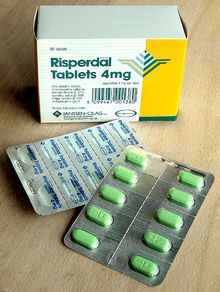
Exclusive: Copy of Judge's "Penalty Order" in SC Risperdal Action

Well, maybe not "exclusive," but I did manage to obtain a copy of the Penalty Order in the South Carolina Attorney General's action against Johnson and Johnson and the award of $327 million in damages against the pharmaceutical company (which I have blogged about, including a post yesterday).  Since that post, I have obtained a copy of Judge Roger Couch's "Penalty Order" in which he sets damages and explains the rationale for them.  You can find a copy of the Penalty Order at this link

I have not had a chance to digest the Order yet, and I wanted to get it posted as I can tell from my site statistics that there is considerable interest about this case and the award of damages.  However, from my quick review, the high spots are as follows:
  • The judge focuses on the "Credo of Johnson and Johnson" as published on its website and referred to in annual reports to tee up how he is approaching the case (p. 3).
  • He recognizes the benefits of drug companies, medicine in general, and even Risperdal.  He also points out that they are a for-profit company...but he goes back to the Credo as the company's "first obligation" (pp. 3-4).
  • He assesses the good/bad faith of the defendant and stresses that he is focused on what was known about the drug at the time statements were made (pp. 4-5).
  • He reviews the labeling of the drug, what the company knew and when, and finds that the "Defendants exhibited a callous disregard to a patient's right to have all possible information available, and in the hands of their physician, before deciding to use or continue to use the drug" (p. 8). 
  • He reviews the "Dear Doctor" letter from November of 2003 and describes it as an effort to "manipulate the message about Risperdal" (p. 9).  He also relies on some testimony from a Janssen executive about the "Dear Doctor" letter that is unfavorable (p. 10) and concludes that the actions of the company exhibited "extreme bad faith" (id.).
  • He talks about "Injury to the Public" as a component of a South Carolina Unfair Trade Practices action, including reference to his charge on this component (pp. 10-12).  He notes that the jury found that the actions injured the public and were capable of repetition (p. 12).
  • He assesses the "Desire to eliminate the benefits derived from a violation" and admits that this is "virtually impossible to accurately determine" (p. 13).  However, he points out the profit from the drug were "enormous," but also notes the releative small percentage of business conducted in South Carolina (id.).
  • He assesses "The necessity of vindicating the authority of the agency involved" and notes that the South Carolina Attorney General is the one with the burden and duty to vindicate the public's interest in the case (pp. 13-14).
  • He then goes into "The Defendant's ability to pay" at length (pp. 14-16), including the number of violations.  This includes a statement of Annual Sales of Risperdal worldwide (p. 15) and J&J's earnings.
  • Finally, he assesses the number of times the label was published -- 509,499 sample boxes distributed -- and assesses $300 per violation, for a total of $152,849,700 (p.16-17).  He does similar analysis for the number of "Dear Doctor" letters mailed (7,184) and sales calles where the letter was published (36,372), for a total publication of 43,556, and assesses $4,000 per violation, for a total of $174,224,000 (id).
  • Therefore, the total damages are $327,073,700 (p. 17).
An interesting order, and I welcome reader comments. 

This post is subject to the DISCLAIMER AND TERMS OF USE of this website.