Showing posts with label Verdicts. Show all posts

Friday, September 13, 2013

Verdict Survey: $38 Million Asbestos Verdict in Richland County

About two weeks ago, I saw my friend Theile McVey at Starbucks.  She mentioned in our general chit-chat that she was in trial.  As shop talk usually goes, I asked her what kind of case it was, and she said it was an asbestos case.  Apparently, it went pretty well.  I don't have much in terms of details and will try to update this post if/when I get more information, but for now, John Monk at The State Newspaper did a nice article today, which can be found here and is cut and pasted below.  (I added in a few hyperlinks for additional information).

Richland County jury awards $38 million in asbestos case
Published: September 12, 2013 Updated 12 hours ago
By JOHN MONK — jmonk@thestate.com
A Richland County jury has awarded a Wagener equipment worker and his wife $38 million in damages for health problems linked to exposure to asbestos.
Following a 21/2-week trial, the jury awarded plaintiff Lloyd Strom Garvin, 74, $10 million in actual damages and another $1 million in actual damages to his wife of 50-plus years, Velda Garvin, for loss of consortium.
The jury also ordered defendants Durco and Crane Co. to pay $11 million each in punitive damages to Lloyd Garvin. It ordered a third defendant, Byron Jackson, to pay $5 million in punitive damages.
A spokesman for Crane said Thursday the company will appeal. Among possible grounds for appeal are “no credible evidence” and excessive and unwarranted jury awards, said TerryBudd, a Pittsburgh lawyer who represents Crane.
“The verdict is flawed,” Budd said. “We’re definitely appealing.”
Efforts to reach Charleston attorney Tim Bouch, who represented Durco and Byron Jackson during the trial, were unsuccessful Thursday.
Durco, Byron Jackson and Crane are major companies that manufacture pumps and valves. Garvin contended his years of exposure to their asbestos-containing gaskets and packing in valves and pumps that he used in factory and farm work caused him to develop mesothelioma, a rare form of cancer that plaintiffs said was nearly always caused by asbestos exposure.
The jury was out some four hours and returned a final verdict around 9 p.m. Wednesday night. Circuit Judge Garrison Hill of Greenville presided.
Originally, Garvin’s lawsuit named 13 defendants, but most had been dropped or settled by the time the trial began Aug. 26.
Garvin’s lawyers, Jessica Dean of Dallas and Theile McVey of the Columbia firm Kassel McVey, argued at trial that defendants Crane, Durco and Byron Jackson used asbestos in their products, should have known about its dangers and failed to take action to warn and protect people like Garvin who work around their products.
Garvin’s testimony and cross-examination during trial was presented to the jury by a video recording displayed on a large courtroom screen.
He is currently recovering from double pneumonia. His lawyers contended at trial that he has less than a year to live because of his cancer.
During closing arguments, Garvin’s attorney Dean asked the jury to award $1 million in actual damages for each year of life that Garvin was expected to miss because of his fatal disease. Garvin’s life expectancy would have been another 10 to 11 years, she argued.
Attorney Robert Meriwether of the Columbia firm Nelson Mullins and Bouch were the defendants’ attorneys during trial.
According to a complaint in 2012 action, some of Lloyd Garvin’s exposure to asbestos-containing equipment and products came in Wagener while working on his family farm, as well as while working as a heavy equipment operator in West Columbia and Aiken.
The trial took place in Richland County because the complaint, filed in 2012, alleged some of the exposure had a Richland County connection.
Reach Monk at (803) 771-8344.
This post is subject to the DISCLAIMER AND TERMS OF USE of this website.

Monday, August 5, 2013

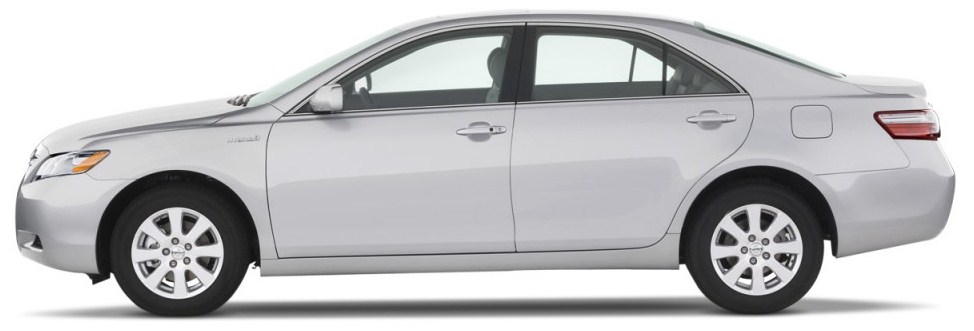
Verdict Survey: 2009 Rollover of Toyota Camry in Aiken County


On June 21, 2013, a jury returned a defense verdict in a rollover case tried in United States District Court, Aiken Division.  The details of the case are set forth below.

Capsule Summary: On June 21, 2013, a jury returned a defense verdict in a case involving a fatal rollover event in a 2009 Toyota Camry.  The driver's personal representative for the estate brought a wrongful death suit against multiple defendants, alleging claims for strict products liability, breach of warranty, and negligence.

Case Information: Alacia C. Quinton as PR for the Estate of April Lynn Quinton, Plaintiff, v. Toyota Motor Corporation; Toyota Motor Sales U.S.A., Inc.; Toyota Motor Engineering and Manufacturing North America, Inc., Toyoda Gosei North America Corporation, Defendants, C/A No.: 1:10-cv-02187-JMC.

Date of Verdict: June 21, 2013

Venue: United States District Court, District of South Carolina, Aiken Division

Judge: The Honorable J. Michelle Childs

Factual Background: On October 14, 2009, April Lynn Quinton was driving a rented 2009 Toyota Camry in Aiken, South Carolina.  She lost control of the vehicle while driving north into a left-hand curve.  The car exited the road, struck an embankment, and rolled over several times before coming to rest on its wheels.  Ms. Quinton was partially ejected and suffered severed head injuries from which she never recovered.  She died on October 23, 2009.

Allegations and Procedure: Plaintiff filed a wrongful death and survival action against Defendants in the Aiken County Court of Common Pleas.  In the Complaint, Plaintiff asserted claims for strict products liability, breach of warranty, and negligence.  Plaintiff alleged the vehicle's roof structure and seat belt restraint system were defective generally.  Plaintiff also alleged that the supplemental restraint system, which involved certain airbag technology, was defectively designed.   More specifically, the 2009 Toyota Camry's supplemental restraint system included a curtain shield airbag ("CSA").  This system deploys above the vehicle's doors to protect a passenger's head from side impacts.  Plaintiff alleged that the vehicle lacked a rollover-activated curtain shield airbag ("RCSA").  This system, which was not included in the 2009 vehicle, has a rollover sensor that deploys the curtain shield airbags when it senses the car is rolling over.

Defendants removed the case to the United States District Court of the District of South Carolina, Aiken Division.  Defendants answered the Complaint and later filed a motion for summary judgment.  The Court granted the motion with regard to Plaintiff's claims relating to a defective roof and defective seat belt restraint system.  However, it denied summary judgment on Plaintiff's claim of a defectively designed supplemental restraint system.

At trial, the primary liability theory remaining and asserted by Plaintiff was the claim that the driver's side airbag failed to fully deploy.  Plaintiff alleged this failure was the result of a hole in the airbag during manufacture (i.e., manufacturing defect).  Defendants demonstrated that the hole found in the airbag post-accident was created during the severe four-roll rollover event as the bag was constrained and over-pressurized.  In addition, the defendants presented evidence of the Quality Assurance/Quality Control procedures followed a the non-party manufacturers. 

Experts: Plaintiff presented the following experts: Ron Kirk (accident reconstruction), Robert Bowser (airbag design), Richard Edwards (materials science), and Joe Burton (biomechanics).  Defendants presented the following experts: Geoff Germane (accident reconstruction), Bob Gratzinger (roof structure), Mike Klima (airbag design), Karen Balavich (airbag/materials science) and Catherine Corrigan (biomechanics).

Alleged Damages: Plaintiff asked for $5 million.

Result: After four hours of deliberation, the jury returned their verdict in favor of the defendants.

Miscellaneous: This case also involved some pre-trial motions, one of which was a motion in limine by Plaintiff to exclude all evidence related to accident causation or fault.  I will try to post the Court's Order on that motion later in the week, as it provides some interesting insight into our state's movement toward Restatement (Third) of Torts: Products Liability (1998) and crashworthiness.  Also, special thanks to my friends and former colleagues, Dick Willis and Angela Strickland, for calling this case to my attention.  Dick and Angela were on the defense trial team for this case.  They were also kind enough to present the case at our products liability breakout session at the South Carolina Defense Trial Attorneys Association Summer Meeting a couple of weeks ago.

This post is subject to the DISCLAIMER AND TERMS OF USE of this website.

Tuesday, June 18, 2013

Verdict Survey: Tankless Water Heaters in Dorchester County

The May 2013 issue of Verdict Search included a South Carolina products liability case tried in Dorchester County.  The details of the case are set forth below.

Capsule Summary:   On March 1, 2013, a Dorchester County jury returned a verdict in favor of the plaintiff for $750,000 in a case involving tankless water heaters purchased by the plaintiff plumbing company.  Plaintiff alleged the tankless water heaters it purchased failed once temperatures began to drop in the winter, causing water pipes in the homes in which they were installed to burst. 
 
Case Information: Amo, LLC v. Eccotemp Systems, LLC, Greenwave Hot Water Heaters, LLC/Eccotemp Systems, LLC v. Hurricane Construction, Inc., C/A No. 2010-CP-18-01920, Dorchester County Court of Common Pleas.
 
Date of Verdict:  March 1, 2013


Factual Background:  In 2008, Plaintiff Amo, LLC (“Amo”) (a plumbing company) purchased 75 tankless water heaters and installed them in various homes.  Amo purchased the units from Eccotemp Systems, LLC (“Eccotemp”).  The water heaters were supposed to produce warm water on demand and conserve energy.  They were also allegedly 30 to 40 percent less expensive than the price of competitor products that were similar.  Amo paid $498 per unit.  In the winter of 2008, and as temperatures began to fall, the units Amo purchased began to fail and caused water pipes in the homes in which they were installed to burst. 
 
Allegations and Procedure: Amo sued Eccotemp and claimed Eccotemp manufactured and sold a defective product.  Amo alleged causes of action for breach of warranty, breach of contract, and violation of the South Carolina Unfair Trade Practices Act.  Amo also named the retailer that sold the water heaters, but the retailer was dismissed later by Plaintiff’s counsel.  Eccotemp then impleaded Hurricane Construction, Inc. (the homebuilder) for whom Amo installed the units, but Hurricane was dismissed from the case prior to trial.
 
At trial, Amo's counsel argued Eccotemp’s products included broken thermostats, which caused water pipes to freeze.  The thermostats also caused the units to malfunction and not heat water inside the units if temperatures dropped below 37 degrees fahrenheit.   There was testimony at trial that 70 percent of units sold to Amo by Eccotemp failed.  Eccotemp replaced 40 of the units, and 14 of them froze again.  Amo's counsel argued that several homeowners experienced as many as three Eccotemp water heater failures in their homes during the cold months.  When Amo replaced the Eccotemp units with a competitor’s units, those units did not fail.  Amo introduced evidence of a pattern of behavior by Eccotemp, including evidence that homeowners in several states had similar problems with the water heaters.
 
Eccotemp argued that the products' failure was not the result of a product defect.  Instead, it argued Amo's employees installed the units in the homes incorrectly.  Eccotemp also claimed the homeowners contributed to failure of the units and frozen water pipes by not allowing their pipes to drip during cold weather.
 
Experts: Amo's expert was Gary Roland, a plumber in Lexington, South Carolina.  Defendant’s expert was Michael Richmond, a plumber in Charleston, South Carolina. 
 
Alleged Damages:  Amo's counsel sought a recovery of $158,000, as well as attorney’s fees and costs.  Amo's counsel requested that the damages be trebled pursuant to the South Carolina Unfair Trade Practices Act.  Defendant’s counsel disputed these damages.
 
Result: The jury returned a Plaintiff’s verdict, in favor of Amo and determined the damages for breach of warranty, breach of contract, and unfair trade practices totaled $750,000.  The jury apportioned $125,000 to breach of warranty, $158,000 to breach of contract, and $474,000 to the unfair trade practices claim.
 
Miscellaneous:  The last demand in the case was $85,000.  The last offer was $42,500, which the write-up indicates was withdrawn.  After the verdict, Eccotemp filed a motion for a mistrial, which was denied.  Eccotemp filed a Notice of Appeal with the South Carolina Court of Appeals and also filed for United States Bankruptcy Chapter 11 bankruptcy protection.  The write-up indicates the information contained therein was provided by Plaintiff’s counsel, and none of the Defendants’ counsel responded to inquiries.
 
Thanks to the May 2013, Volume 12, Issue 5 of Verdict Search for this information.  I also frequently use their verdict search engine, www.verdictsearch.com.

 This post is subject to the DISCLAIMER AND TERMS OF USE of this website.

Tuesday, March 26, 2013

Janssen Pharmaceutical Risperdal Appeal

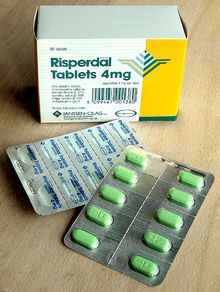
South Carolina Lawyers Weekly ran an article last week concerning Janssen Pharmaceutica's appeal of a $327 million penalty handed down by Judge Robert Couch in 2011. I did extensive blogging about this case in March and June of 2011, and you can find those posts either by searching "Risperdal" in the search bar above or by clicking here (March 9, 2011), here (March 22, 2011), here (March 23, 2011), here (June 6, 2011), and here (June 7, 2011, which is a link to Judge Couch's Order concerning damages).

According to the article, Janssen's attorney argued before the South Carolina appellate court that Janssen did not mean to deceive anyone, and no one in the state was hurt.  The attorney representing South Carolina Attorney General Alan Wilson argued Janssen had a duty to update its labels when it learned of study results showing a possible link to weight gain and diabetes.  According to the article, the court is likely to issue its decision in several months.  A direct link to the article can be found here.  A cut and paste of the article is below.  Nice coverage by South Carolina Lawyers Weekly.

Drug maker asks court to overturn $327M penalty

By The Associated Press
Published: March 21, 2013
Time posted: 4:20 pm

COLUMBIA (AP) - South Carolina's high court should overturn a penalty of hundreds of millions of dollars over deceptive drug marketing in part because the manufacturer didn't mean to deceive anyone, and no one in the state was hurt, an attorney for a Johnson & Johnson subsidiary argued before justices on Thursday.

Mitch Brown represents Janssen Pharmaceutica Inc., a subsidiary of New Brunswick, N.J.-based Johnson & Johnson. The drug maker is challenging a Spartanburg County jury's 2011 decision that Janssen broke the law by writing to thousands of South Carolina doctors, downplaying the links between diabetes and its schizophrenia drug Risperdal, and by improperly claiming the drug was safer than competing medications, like Eli Lilly & Co.'s Zyprexa.

"The conduct hasn't caused one South Carolinian any harm," Brown told the state Supreme Court. "The state can't get any penalties without showing the element of willfulness. … There wasn't any evidence that any doctor was misled."

Janssen has been litigating throughout the country over its Risperdal marketing, announcing in August a $181 million settlement with 36 states and the District of Columbia. Janssen admitted no wrongdoing, and South Carolina was not part of that deal.

First launched in 1994, the blockbuster anti-psychotic drug Risperdal lost patent protection in 2008. Johnson & Johnson has said that Risperdal Consta, the long-acting version of the drug, generated $1.4 billion in sales last year.

After the South Carolina jury's decision, a state judge assessed a $327 million penalty against Janssen, the largest drug marketing award in state history and the largest penalty levied for violations of the South Carolina Unfair Trade Practices Act.

Circuit Judge Roger Couch assessed a $300 penalty per sample box of the drug that was distributed. He also assessed a $4,000 penalty per publication of the "Dear Doctor" letter, writing that Janssen knew Risperdal was associated with health problems but intentionally hid studies to that effect, instead telling doctors their drug led to lower incidence of diabetes and weight gain than a competing medicine.

Justice John Kittredge argued to Brown that, while the sample box labels in question had been approved by the U.S. Food and Drug Administration, the drug company should still bear some responsibility in ensuring that its products and marketing aren't also in violation of state laws.
"You're putting it on the back of the FDA to be the police of this," Kittredge said.

John Simmons, who made arguments on behalf of Attorney General Alan Wilson, called the circuit judge's opinion "thoughtful" and said Janssen should have updated its labels as soon as it learned of study results showing the drug's possible links to weight gain and diabetes.

"Janssen had a duty … to put that in the warning section," Simmons said. "Janssen hid unfavorable clinical evidence."

The court will likely issue its decision in several months. Should they opt to reduce the award against Janssen, Brown asked justices to determine "a reasonable penalty amount" themselves and not leave that decision up to a lower court judge.

The company is also appealing an Arkansas judge's decision ordering Janssen to pay more than $1.2 billion in fines, as well as a $258 million verdict in Louisiana. Two cases against Janssen in Pennsylvania and West Virginia were eventually dismissed.
This post is subject to the DISCLAIMER AND TERMS OF USE of this website.

Tuesday, February 12, 2013

Verdict Survey: Chicken Sandwich in Cherokee County

Remember that blog about me posting regular content in the form of verdict surveys every week?  Yeah, me neither.  Sorry for the hiatus.  This week's verdict survey involves a hot chicken sandwich.

Capsule Summary: A Cherokee County jury returned a defense verdict in a claim brought by a male plaintiff in his mid-forties in which he alleged the chicken sandwich he purchased from a Burger King was too hot and caused second degree burns to his gums.

Case Information: Frank Chancellor v. Carrols Corporation d/b/a Burger King Restaurants, Civil Action Number 2008CP1100139.

Date of Verdict: March 3, 2010.

Venue: Cherokee County Court of Common Pleas

Judge: The Honorable J. Mark Hayes, II

Factual Background: A father went with his son to a Burger King Restaurant owned by the defendant, Carrols Corporation.  The plaintiff placed a carryout order for a kid's meal for his son and a chicken sandwich for himself.  Once they were on the road, the plaintiff unwrapped the chicken sandwich and took a bite.  The bite of sandwich lodged in an area of the plaintiff's mouth where he was missing some teeth, and he alleged it caused second degree burns to his gums.

Allegations and Procedure:  Plaintiff filed his lawsuit in the Cherokee County Court of Common Pleas.  He alleged a cause of action for breach of warranty of merchantability on grounds that the sandwich was too hot.  The defendant argued that customers wanted their sandwiches to be hot.  They also argued the plaintiff's actions were inconsistent with his allegations, especially by the fact that he did not seek treatment from his doctor for the alleged injury.

Experts: None listed.

Alleged Damages:  Plaintiff was a married male in his mid-forties.  He was employed by General Electric.  He alleged $1,500 in past medical special damages.

Disposition: After 15 minutes of deliberation, the jury returned a defense verdict.

This post is subject to the DISCLAIMER AND TERMS OF USE of this website.

Monday, December 31, 2012

Holiday Case Brief and Verdict Survey: Gasque v. Heublein, Inc.

I hope you have enjoyed the holidays and are ready for the new year.  This has been one of my busiest times around the holidays in awhile, but I could not miss the opportunity to do a holiday season "food" post.  Last year, I tried to do a comprehensive series about South Carolina's products liability law in the context of food cases.  However, I missed one of the more interesting cases, and I thought it would be blogworthy at this time of year (especially in light of the amount of wine and champagne that will be consumed this evening).  Gasque v. Heublein, Inc., 281 S.C. 278, 315 S.E.2d 556 (Ct. App. 1984) involves a cork that prematurely ejected and caused injury to a plaintiff's eye.  An Horry County jury returned a verdict for $750,000, and the South Carolina Court of Appeals affirmed the verdict.

FACTUAL BACKGROUND: Plaintiff sustained permanent loss of vision in his left eye when he was struck by the stopper and cork assembly of a bottle of Jacques Bonet Cold Duck sparkling wine.    281 S.C. at 281, 315 S.E.2d at 558.  The stopper allegedly ejected prematurely when Plaintiff's friend was twisting the wire retaining hood on the cork.  Id.

PROCEDURE: Plaintiff brought suit against the manufacturer-bottlers ("Defendants") of the sparkling wine, as well as three other defendants in the chain of distribution.  281 S.C. at 281, 315 S.E.2d at 558.  Plaintiff asserted causes of action for negligence, warranty, and strict liability, and he sought actual and punitive damages.  Id.  The case was submitted to the jury on the theories of negligence and strict liability.  Id.  The jury returned a general verdict for $750,000 in actual damages against Defendants.  Id.   

ISSUES: There were three issues on appeal: (1) whether the trial court erred in submitting the issues of negligent (a) design, (b) manufacture, (c) inspection, and (d) failure to warn; (2) whether the trial court erred in admitting into evidence a filmed experiment conducted by Plaintiff's expert; and (3) whether the trial court erred in failing to grant Defendants' motion for a new trial absolute on grounds that the verdict was actuated by passion, prejudice and caprice.  281 S.C. at 281, 315 S.E.2d at 558. 

DISPOSITION: The South Carolina Court of Appeals affirmed the trial court on all three issues.

OPINION: The appellate court addressed each of the issues in the order in which they were raised, as set forth below.

(1) Submission of Negligence Theories

With regard to negligent design, Plaintiff presented reports of studies commissioned by one of the Defendants concerning premature ejection of champagne stoppers.  281 S.C. at 282, 315 S.E.2d at 559.  The reports identified the problem of premature ejection and suggested design alternatives to correct it.  Id. at 282-83, 315 S.E.2d at 559.  Defendants' Quality Control Director also testified that before Defendants' switched from wood stoppers to polyethylene stoppers, they had no reports of injuries.  Id.  One of the reports also discussed the various problems with polyethylene stoppers versus wood stoppers.  Id.  In short, the evidence showed Defendants were aware of the problem of premature ejection, knew about feasible alternative designs, were aware that wood corks were safer, and elected to use an undrilled and uncoated polyethylene stopper to retain the festive "pop" of the cork.  Id. at 283, 315 S.E.2d at 559.  Plaintiff also presented expert testimony in support of his theory.  Id. at 284, 315 S.E.2d at 559.  The evidence was sufficient to submit the issue of negligent design to the jury.

With regard to negligent manufacture, Plaintiff presented the cork at issue and had his expert testify there was a groove on it that was distinguishable from other stoppers.  Id. at 284, 315 S.E.2d at 560.  Plaintiff's expert testified the groove was caused by improper attachment of the wire retainer to the stopper during manufacture, and this manufacturing defect contributed to premature ejection.  Id.  Based on this evidence, the court upheld submission of negligent manufacture to the jury.  Id.

With regard to negligent inspection, the court concluded that the testimony of Defendants' Quality Control Director supported submission of this issue to the jury.  Id. at 285, 315 S.E.2d at 560.  The director testified a pressure check was performed on only one out of every 30,000 to 40,000 bottles, and quality control personnel had only one or two seconds to ascertain whether or not the wire hood was properly attached to the stopper.  Id.

With regard to negligent failure to warn, the court concluded that the warning at issue was approximately 1/8 the size of the print used to advertise the product's name, and it did not mention premature ejection (just that the contents were under high pressure and that the bottle should be pointed away).  Id.  The court held the language of the warning, its placement, and print size created a jury question as to its adequacy.  Id.  The issue of negligent failure to wan was properly submitted to the jury.  Id.

(2) Admission Into Evidence of Filmed Experiment

To be admissible at trial, an experiment or test must have been made under conditions and circumstances substantially similar to those prevailing at the time of the occurrence involved in the controversy.  Id. at 286, 315 S.E.2d at 560 (citing Weaks v. South Carolina State Highway Dep't, 250 S.C. 535, 159 S.E.2d 234 (1968)).  Plaintiff's expert introduced a filmed experiment conducted by his expert where a stopper in the product at issue spontaneously ejected when the expert began twisting the wire retaining hood.  Id.  The trial judge allowed the jury to view the experiment.  Id.  Defendants argued the admission was error because the experiment utilized champagne (instead of sparkling wine), involved a different size bottle, and had different temperatures.  Id. at 286, 315 S.E.2d 560-61.  Plaintiff's expert testified the properties the experimental bottle were substantially the same.  Id., 315 S.E.2d at 561. 

The court noted that admission of evidence is a matter for the trial judge's discretion and will not be disturbed absent abuse of discretion.  Id.  The court also noted that Defendants vigorously cross examined the expert on the distinctions between the experiment and and facts of the case.  Id. at 287, 315 S.E.2d at 561.  The court held the conditions of the filmed experiment were substantially similar to those existing at the time of injury.  Id.  However, even if they were not, this issue did not warrant reversal because the experiment was cumulative of other evidence introduced by Plaintiff (including testimony of the friend who opened the bottle, experts, and the information contained in Defendants' reports about premature ejection).  Id. (citing Beasley v. Kerr-McGee Chem. Corp., 273 S.C. 523, 257 S.E.2d 726 (1979)).

(3) Excessiveness of Verdict

The court noted it has limited power to interfere with verdict amounts, which are left almost entirely to the judge and jury.  Id. at 287, 315 S.E.2d at 561 (citing Charles v. Texas Co., 199 S.C. 156, 18 S.E.2d 719, 729 (1942)).  The court cannot reduce a verdict, and it will only strike a verdict down completely if the amount is so shockingly excessive as to indicate it is the result of passion, caprice, and prejudice.  Id.  In view of the severity and permanency of Plaintiff's injury, the court did not find the verdict of $750,000 to be excessive.  Id. at 288, 315 S.E.2d at 562.  In short, there was substantial evidence concerning Plaintiff's pain, multiple surgeries, impact on vision, and change in lifestyle.  Id. at 288-89, 315 S.E.2d at 562.  Based on the evidence, the court did not find the verdict to be excessive.  It also reviewed verdicts for loss of vision cases elsewhere that were also similar to the jury's verdict.  Id.

This post is subject to the DISCLAIMER AND TERMS OF USE of this website.

Tuesday, November 13, 2012

Verdict Survey: Dialysis Machine in Charleston County

Capsule Summary: A federal court in Charleston County returned a judgment of $50,398 for a seventy-nine-year-old male dialysis patient who sustained injuries when a renal machine failed during treatment.

Case Information: Kasie Blake v. DVA Renal Healthcare, C/A No. 9:06-1257

Date of Verdict: February 27, 2008

Venue: United States District Court for the District of South Carolina, Charleston Division

Judge: Solomon Blatt, Jr.

Factual Background: Kasie Blake ("Plaintiff") was a married, seventy-nine-year-old dialysis patient at DVA Renal Healthcare ("Defendant").  During one of his dialysis procedures, the machine stopped working.  Plaintiff alleged negligence against Defendant in that the machine was not effectively prepared to restart if it lost power.  His wife also alleged a claim for loss of consortium.  Defendant denied responsibility for the machine's failure and disputed Plaintiff's damages.

Experts: None listed.

Alleged Damages: Plaintiff alleged he developed First Use Syndrome which is an anaphylactic reaction to an artificial kidney.  Symptoms include sneezing, shortness of breath, wheezing, back and chest pain, and risk of death.  Plaintiff required six days of hospitalization and continued to complain of complications thereafter.

Disposition: The lawsuit resulted in a $50,398 judgment.  Although I assume this was a jury verdict, the report does not specify one way or the other (i.e., it only indicates a "judgment"). 

This post is subject to the DISCLAIMER AND TERMS OF USE of this website.

Thursday, November 1, 2012

Verdict Survey: Exploding Gun in Florence County


Capsule Summary: On May 1, 2004, a Florence county jury returned a Plaintiff’s verdict in a case involving explosion of a gun, which caused loss of three fingers on Plaintiff’s right hand, diminished vision, and bilateral hearing loss. 

Case Information: Matthews v. Olin Corporation, Case No. 01-CP-21-1729

Date of Verdict: May 1, 2004

Venue: Florence County Court of Common Pleas

Judge: James E. Brogdon, Jr.

Factual Background: Plaintiff was a seventy-year-old male who was married and a retired steel worker.  He went to a sporting goods store to purchase black powder for his black powder muzzle rifle.  The retailer recommended a new smokeless ball powder, which was manufactured Olin Corporation (“Defendant”).  Plaintiff purchased the smokeless ball powder and took it home to use it.  He tried twice to fire his gun, but was unsuccessful.  He returned to the retail store and was instructed to try and fire the gun one more time.  When he did, the gun exploded.

Plaintiff sued the retailer, distributor, and the manufacturer in a product liability case.  He alleged the label on the powder was misleading and the warning label was inadequate.  He claimed the label failed to properly warn of the hazards of substituting smokeless propellants for black powders.  He also alleged the warning was unclear and inconspicuous, and no warning was give with regard to the danger of using the product in a ball powder muzzle loading rifle.  He claimed Defendant was negligent in failing to provide sufficient information to distributors or retailers on the danger of using the product in the place of black powder. 

Defendant claimed the label was adequate and warned against substituting powders.  Defendant also argued the Plaintiff failed to read the warning and loaded his rifle with a double charge.  Defendant generally argued Plaintiff's misuse of the product caused the explosion. 

Plaintiff admitted he had not entirely read the label and conceded it said “Do not mix powders, do not substitute powders.”  However, he argued use of the powder was inferred by the title of “ball powder,” and there was no specific warning against using smokeless powder in a black powder muzzle rifle.  He also presented competitor warning labels displaying a warning against use of smokeless powders in black powder rifles. 

Experts: Plaintiff retained Richard Moll of Madison, Wisconsin as an expert on product safety and Dean Harris of Columbia, South Carolina as an engineer/rifle expert. 

Alleged Damages: Plaintiff lost three fingers and a substantial amount of blood.  He developed a central retinal vein occlusion from the blood loss, which caused partial vision and partial hearing loss.  He also claimed medical expenses of  $50,000.

Disposition: Defendant assumed representation of the distributor from the onset of the case.  The retailer settled with Plaintiff prior to trial for $187,500, including loss of consortium.  The jury returned a verdict of $150,000 for strict liability and $160,000 for negligence ($150,000 in compensatory damages and $10,000 in punitive damages) against Defendant.  The jury found Plaintiff to be fifty percent at fault on the negligence claim.  Therefore, Plaintiff elected to recover on the strict liability claim.  A partial credit to the manufacturer for the previous settlement would have reduced the verdict to approximately $56,500.  The parties negotiated a post-verdict settlement for $95,000, which included Plaintiff’s wife’s consortium claim. 

This post is subject to the DISCLAIMER AND TERMS OF USE of this website.

Thursday, October 25, 2012

Verdict Survey: Jeans in Anderson County

This week's verdict survey involves jeans in Anderson County.  I grew up in Anderson County and have fond memories of it.  I am a proud graduate of T.L. Hanna High School, and I tell people that my only "claim to fame" is that I know Radio and Coach Harold Jones personally.  I even ran track with Radio, and Coach Jones was my track coach.  (Radio always "managed" the football team in the fall, and he ran track in the spring...100m and 200m).  If you are not familiar with these characters, watch the movie.  (My wife hates it when this movie up comes up in conversation because I remind her, "I don't have to watch the movie babe...I lived it"...(looking off in the distance dramatically)).

Capsule Summary: On August 26, 2004, an Anderson County jury returned a defense verdict in a case involving jeans that caught on fire and burned a fourteen-year-old male. 

Case Information: Deborah L. Henderson, Individually and as Guardian ad Litem for Travis Henderson, a Minor, et al v. Tommy Hilfiger Corp. and Dillards, Inc., Case No. 2002-CP-04-2063

Date of Verdict: August 26, 2004

Venue: Anderson County Court of Common Pleas

Judge: J. Cordell Maddox, Jr.

Factual Background: A fourteen-year-old male was setting off fireworks when the jeans he was wearing caught on fire.  The jeans were manufactured by Defendant Tommy Hilfiger Corp. and purchased from Defendant Dillards, Inc.

Allegations and Procedure:  Plaintiff brought a products liability lawsuit against Defendants in which she alleged the jeans were defectively manufactured, contained flammable materials, and were unreasonably dangerous.  Defendants argued that the boy was responsible for his own injuries since he was playing with fireworks.

Experts: Plaintiffs retained Meyer Rosen, a chemical consultant from East Norwich, New York.

Alleged Damages: The minor alleged second degree burns to the lower extremities.  He claimed permanent scarring to his right thigh and past medical expenses of $1,758.

Disposition: After two hours of deliberation, the jury returned a defense verdict.

This post is subject to the DISCLAIMER AND TERMS OF USE of this website.

Monday, October 15, 2012

Verdict Survey: Playground Equipment in Greenville County

Products liability verdicts are fairly infrequent in South Carolina, as our state seems to be following the unfortunate trend that fewer and fewer cases actually go to trial.  Therefore, in an effort to put some “meat” on the bones of the “Verdicts” portion of this site (and to provide greater frequency of content), I am going to periodically survey past verdicts in South Carolina products liability cases.  Similar to the Case Briefs, these posts will provide some basic case information that may be useful if you are evaluating a similar case of your own.  I am generally going to profile more recent verdicts first, and work my way backward.  In addition, this exercise will also add some content on experts utilized during the trials.

So without further I ado, I give you the first verdict survey.  

Capsule Summary: On March 20, 2008, a Greenville County jury returned a defense verdict in a playground equipment case involving alleged injuries to a fifty-five-year-old grandmother.  She was injured while helping her grandson on a “track ride” piece of equipment (general depiction above).

Case Information: Mascow v. Playland International, Inc., C/A No. 06-CP-23-0664R

Date of Verdict: March 20, 2008

Venue: Greenville County Court of Common Pleas

Judge: John C. Few

Factual Background:  The case involved a married, fifty-five-year-old grandmother who was a salon owner. She sustained injuries while playing with her grandson at a playground.  Plaintiff was assisting her grandson with the “track ride” equipment and claimed the horizontal bar on the ride came loose and fell on her. 

Allegations and Procedure: Plaintiff brought a products liability lawsuit against Playland International, Inc. She claimed Playland manufactured the equipment and that it was defectively designed because of detachment of the horizontal bar.  Playland contended it did not manufacture or sell the equipment at issue.  Playland also claimed that even if it manufactured the equipment, the equipment was safe; there were no other accidents involving the horizontal bar.   

Experts: Plaintiff named Archie Hardy as an expert witness in playground equipment.  Playland attacked the credibility of Plaintiff’s expert.

Alleged Damages: Plaintiff claimed she sustained soft tissue neck, back and arm injuries.  She claimed her low back injury was permanent.  She sought $13,000 in past medical expenses. Playland disputed the nature and extent of Plaintiff’s injuries. 

Disposition: After six hours of deliberation, the jury returned a defense verdict. 

This post is subject to the DISCLAIMER AND TERMS OF USE of this website.

Wednesday, October 10, 2012

Directed Verdict in Products Liability Trial!

On May 30, 2012, I tried a non-jury products liability case in the Lexington County Court of Common Pleas.  The case was smaller, but it had some interesting issues that are blogworthy.  I also received a directed verdict, which was a nice result for a good client.  Set forth below is a summary of the case.

FACTUAL BACKGROUND: The plaintiff was an individual who restored a 1950 Chevy Styleline Deluxe automobile.  (The car to the right is not the actual car, but looks pretty much the same).  After refurbishing the car himself, the plaintiff decided he wanted to paint it a “candy apple” red.  This is significant because “candy” jobs are not your typical automobile paint job.  They have multiple coats and steps, and the thickness of the paint is thicker than a regular paint job.  The plaintiff took the car to a body shop and spoke with someone about painting it.  Long story short, the painter painted the car once and found the paint was “lifting.”  This basically means the multiple layers of paint did not remain set.  The painter wiped all the paint off, started over, and saw the same thing happening again on the second paint job.  He spoke with the paint retailer about the problems with the paint, and the retailer recommended some additional steps.  After taking the additional steps, both the painter and the plaintiff were satisfied with the paint job.  The plaintiff took the car home and began to put the chrome back on himself.  While he was replacing the chrome, he found the paint was “soft” (as he described it); it began lifting again and curling around the chrome. 

PROCEDURE AND DISCOVERY: The plaintiff filed his lawsuit on November 23, 2010.  The Complaint alleged a products liability lawsuit against the paint manufacturer and retailer, including typical claims of strict liability, negligence, and breach of implied warranty of particular purpose.  The Complaint alleged every possible defect relating to the paint, but it was devoid of any allegation of negligence whatsoever against the painter.  The paint manufacturer was not properly served and was in default when I was retained to represent it.  I moved to set aside the default, and the court granted the motion based on the insufficiency of service of process. 

During discovery, we deposed the plaintiff, retailer, painter, and corporate representative for the manufacturer.  The plaintiff also named the painter as his expert witness, but he did not name any other expert with regard to paint manufacture or design.  If you follow this blog, you know I have blogged extensively about the necessity of expert witness testimony in a products liability case.  In a design defect case, South Carolina’s appellate courts have stated unequivocally that a plaintiff must provide expert testimony to sustain his burden of proof with regard to design defect.  

Recognizing the painter was not qualified to opine about paint chemistry or manufacturing process, I moved for summary judgment.  The basis of the motion was that if the court excluded the painter as an expert witness, then my client was entitled to summary judgment based on applicable South Carolina law.  The motion was denied, and the case was set for trial.  After attempting to resolve the case, we reached an impasse and decided to try the case. 

TRIAL: Plaintiff did not request a jury trial.  Therefore, on May 30, 2012 Judge Letitia Verdin presided over the one-day trial and heard testimony and argument.  The court heard testimony from the plaintiff and from his “expert,” the painter.  The court recognized the painter could not opine as to paint design or manufacture.  Therefore, the court limited his testimony to paint application and the steps he took to apply the paint at issue.  My cross examination of the plaintiff and his painter focused on the fact that this particular paint job requires certain steps, and discovery revealed that either (1) certain steps were not followed, or (2) they could not be accounted for by the painter or the plaintiff.  After testimony by the plaintiff and painter, the plaintiff rested his case.

At the directed verdict stage, I focused on the fact that res ipsa loquitor cannot serve as a basis for a products liability claim in South Carolina.  See, e.g., Watson v. Ford Motor Co., 389 S.C. 434, 452-53, 699 S.E.2d 169, 179 (2010) ("We also note that Respondents may not rely solely on the fact that an accident occurred to prove their products liability case under a negligence theory since South Carolina does not follow the doctrine of res ipsa loquitur.")).  In other words, there is substantial case law requiring that a plaintiff provide proof of defect (i.e., without speculating as to possible defects just because the product did not perform as intended). 

DISPOSITION:  After hearing the various motions, Judge Verdin granted a directed verdict for the paint manufacturer, but denied the retailer’s directed verdict motion.  The retailer opted not to present a defense, and Judge Verdin took his case under advisement.  She later decided in favor of the retailer, as well, and issued an Order on July 30, 2012 in which she rendered a defense verdict and dismissed the case in its entirety with prejudice.

GENERAL COMMENTS: I never understood why the painter was not named as a party in this case since he was the individual charged with actually applying the paint.  The application stage for this paint is critical because of the complexity of a candy paint job.  Be that as it may, the court recognized the evidentiary issues in this products liability case and issued a directed verdict because the plaintiff failed to sustain his burden of proof.

This post is subject to the DISCLAIMER AND TERMS OF USE of this website.

Tuesday, June 7, 2011

Exclusive: Copy of Judge's "Penalty Order" in SC Risperdal Action

Well, maybe not "exclusive," but I did manage to obtain a copy of the Penalty Order in the South Carolina Attorney General's action against Johnson and Johnson and the award of $327 million in damages against the pharmaceutical company (which I have blogged about, including a post yesterday).  Since that post, I have obtained a copy of Judge Roger Couch's "Penalty Order" in which he sets damages and explains the rationale for them.  You can find a copy of the Penalty Order at this link. 

I have not had a chance to digest the Order yet, and I wanted to get it posted as I can tell from my site statistics that there is considerable interest about this case and the award of damages.  However, from my quick review, the high spots are as follows:
  • The judge focuses on the "Credo of Johnson and Johnson" as published on its website and referred to in annual reports to tee up how he is approaching the case (p. 3).
  • He recognizes the benefits of drug companies, medicine in general, and even Risperdal.  He also points out that they are a for-profit company...but he goes back to the Credo as the company's "first obligation" (pp. 3-4).
  • He assesses the good/bad faith of the defendant and stresses that he is focused on what was known about the drug at the time statements were made (pp. 4-5).
  • He reviews the labeling of the drug, what the company knew and when, and finds that the "Defendants exhibited a callous disregard to a patient's right to have all possible information available, and in the hands of their physician, before deciding to use or continue to use the drug" (p. 8). 
  • He reviews the "Dear Doctor" letter from November of 2003 and describes it as an effort to "manipulate the message about Risperdal" (p. 9).  He also relies on some testimony from a Janssen executive about the "Dear Doctor" letter that is unfavorable (p. 10) and concludes that the actions of the company exhibited "extreme bad faith" (id.).
  • He talks about "Injury to the Public" as a component of a South Carolina Unfair Trade Practices action, including reference to his charge on this component (pp. 10-12).  He notes that the jury found that the actions injured the public and were capable of repetition (p. 12).
  • He assesses the "Desire to eliminate the benefits derived from a violation" and admits that this is "virtually impossible to accurately determine" (p. 13).  However, he points out the profit from the drug were "enormous," but also notes the releative small percentage of business conducted in South Carolina (id.).
  • He assesses "The necessity of vindicating the authority of the agency involved" and notes that the South Carolina Attorney General is the one with the burden and duty to vindicate the public's interest in the case (pp. 13-14).
  • He then goes into "The Defendant's ability to pay" at length (pp. 14-16), including the number of violations.  This includes a statement of Annual Sales of Risperdal worldwide (p. 15) and J&J's earnings.
  • Finally, he assesses the number of times the label was published -- 509,499 sample boxes distributed -- and assesses $300 per violation, for a total of $152,849,700 (p.16-17).  He does similar analysis for the number of "Dear Doctor" letters mailed (7,184) and sales calles where the letter was published (36,372), for a total publication of 43,556, and assesses $4,000 per violation, for a total of $174,224,000 (id).
  • Therefore, the total damages are $327,073,700 (p. 17).
An interesting order, and I welcome reader comments. 

This post is subject to the DISCLAIMER AND TERMS OF USE of this website.

Monday, June 6, 2011

SC Judge Hands Down Damages Order in Johnson & Johnson Risperdal Case

 I have previously blogged (here and here) about South Carolina Attorney General Alan Wilson's lawsuit against Johnson & Johnson and the March 22, 2011 jury verdict against the pharmaceutical manufacturer.  A jury concluded that J&J violated South Carolina's consumer protection laws by sending South Carolina doctors a misleading letter about the safety and effectiveness of the anti-psychotic drug Risperdal.

Last Friday, Judge Roger Couch issued his order on damages in which he ordered J&J to pay $327 million.  An article about the decision can be found at this link, and it is cut and pasted below.  Thanks to bloomberg.com for the excellent coverage.

J&J Ordered to Pay $327 Million Over Deceptive-Marketing Claims

By Jef Feeley and Steven Church - Jun 4, 2011 12:01 AM ET

J&J Risperdal

Johnson & Johnson's schizophrenia drug Risperdal. Photographer: JB Reed/Bloomberg News.

A Johnson & Johnson (JNJ) unit was ordered by a South Carolina judge to pay more than $327 million in penalties for deceptively marketing the antipsychotic drug Risperdal as safer and better than competing medicines.

J&J’s Ortho-McNeil-Janssen Pharmaceuticals unit repeatedly violated the state’s consumer-protection laws by sending a 2003 letter to doctors touting Risperdal as superior to rival drugs and including deceptive information in the product’s warning label, Judge Roger Couch in Spartanburg, South Carolina, concluded.

The drugmaker’s executives “allowed the profit-at-all- costs mentality to cloud” their judgment in connection with the drug’s marketing campaign and its labeling, Couch said in his 17-page ruling.

Janssen official said yesterday they’ll appeal Couch’s order and maintained the company fully disclosed Risperdal’s health risks and properly marketed the antipsychotic medicine.

“We don’t believe that the dissemination of an FDA- approved package insert constitutes a violation of the South Carolina Trade Practices Act,” Kara Russell, a spokeswoman for Janssen said in an e-mailed statement. “We do not believe the ruling can be upheld on appeal.”

South Carolina’s lawyers, who originally sued the J&J unit in 2007 for making misleading claims about Risperdal, sought billions of dollars in penalties over the targeted marketing and labeling material.

Sales Decline

Risperdal’s global sales peaked at $4.5 billion in 2007 and declined after the company lost patent protection. The drug generated $3.4 billion in sales in 2008, or 5.4 percent of New Brunswick, New Jersey-based J&J’s total revenue, according to company filings. Sales of the drug fell to $527 million last year, according to a January earnings report.

Risperdal Consta, the long-acting version of the antipsychotic drug, generated $1.5 billion in sales last year for J&J.

The state’s case centered on drug-safety claims that J&J and Janssen made in November 2003 correspondence to about 700,000 doctors across the U.S., including more than 7,000 in South Carolina.

The U.S. Food and Drug Administration responded with a warning letter saying J&J made false and misleading claims that minimized the potentially fatal risks of diabetes and overstated the drug’s superiority to competing products.

South Carolina’s lawyers argued during a two-week trial of the state’s suit that Risperdal’s safety label also downplayed diabetes and other health risks.

‘Clever Effort’

The faulty labels were included in as many as 722,000 Risperdal prescriptions written in South Carolina from 1994 to 2007, the state’s lawyers told Couch at an April hearing. The deceptive information also was presented in 183,144 sales calls on doctors by Janssen drug representatives, and 496,565 sample boxes distributed over that 13-year period, South Carolina’s lawyers argued.

In his ruling, Couch found the Risperdal letter to South Carolina doctors was a “clever effort” to “manipulate the message” about the drug.

He concluded penalties were warranted for 7,180 letters Janssen officials mailed to physicians in the state along with another 36,372 instances in which the drugmaker’s salespeople used the missive to market Risperdal in person, according to court records.

$4,000 per Violation

Couch awarded South Carolina a total of $174.2 million in penalties over the letter based on a rate of $4,000 per violation of the state’s consumer-protection laws, according to his ruling.

He also found 509,499 sample boxes of Risperdal distributed in the state contained labels with deceptive materials that warranted penalties. The judge awarded the state $152.8 million in penalties over the label at a rate of $300 per violation.

J&J’s lawyers claimed in court papers that the state engaged in “triple counting” by seeking to have prescriptions, marketing letters and sales calls on individual doctors included as violations.

Penalizing the drugmaker for multiple contacts with doctors who were allegedly “misled or deceived each time he or she had been exposed to” the targeted information would be unfair, Steven Pugh, one of the company’s attorneys, said in May 3 filing.

Hold Them Accountable

The award puts drugmakers on notice that if they “try to spin information or try to see what they can get away with,” state officials will hold them accountable, Donald Coggins, a Spartanburg-based lawyer who represented the state, said in an interview yesterday.

The case is the third of about 10 state lawsuits to be considered by jurors over J&J’s Risperdal marketing campaigns. In June, J&J won dismissal of Pennsylvania’s suit alleging the company hid the drug’s diabetes risk and tricked regulators into paying millions more than they should have for the medicine.

A Louisiana jury in October ordered the drugmaker to pay $257.7 million in damages to that state for making misleading claims about Risperdal’s safety. A judge later added $73 million in legal fees to the award.

A West Virginia judge in a 2009 non-jury trial awarded $3.95 million, finding the company misled doctors about the risks and benefits of Risperdal. The state dropped its Risperdal claim after J&J won an appeal, company officials said in February.

J&J fell 39 cents to $66.09 in New York Stock Exchange composite trading yesterday. J&J’s 4.95 percent bonds due in 2033 fell 1.36 percent to 102.3 cents on the dollar, according to Trace, the bond-price reporting system of the Financial Industry Regulatory Authority.

The case is State of South Carolina v. Janssen Pharmaceuticals, 2007-CP-42-1438, Circuit Court for Spartanburg County, South Carolina (Spartanburg).

To contact the reporter on this story: Jef Feeley in Wilmington, Delaware, at jfeeley@bloomberg.net; Steven Church in Wilmington, Delaware, at schurch3@bloomberg.net

To contact the editor responsible for this story: Michael Hytha at mhytha@bloomberg.net

This post is subject to the DISCLAIMER AND TERMS OF USE of this website.