Tuesday, June 7, 2011

Exclusive: Copy of Judge's "Penalty Order" in SC Risperdal Action

Well, maybe not "exclusive," but I did manage to obtain a copy of the Penalty Order in the South Carolina Attorney General's action against Johnson and Johnson and the award of $327 million in damages against the pharmaceutical company (which I have blogged about, including a post yesterday).  Since that post, I have obtained a copy of Judge Roger Couch's "Penalty Order" in which he sets damages and explains the rationale for them.  You can find a copy of the Penalty Order at this link. 

I have not had a chance to digest the Order yet, and I wanted to get it posted as I can tell from my site statistics that there is considerable interest about this case and the award of damages.  However, from my quick review, the high spots are as follows:
  • The judge focuses on the "Credo of Johnson and Johnson" as published on its website and referred to in annual reports to tee up how he is approaching the case (p. 3).
  • He recognizes the benefits of drug companies, medicine in general, and even Risperdal.  He also points out that they are a for-profit company...but he goes back to the Credo as the company's "first obligation" (pp. 3-4).
  • He assesses the good/bad faith of the defendant and stresses that he is focused on what was known about the drug at the time statements were made (pp. 4-5).
  • He reviews the labeling of the drug, what the company knew and when, and finds that the "Defendants exhibited a callous disregard to a patient's right to have all possible information available, and in the hands of their physician, before deciding to use or continue to use the drug" (p. 8). 
  • He reviews the "Dear Doctor" letter from November of 2003 and describes it as an effort to "manipulate the message about Risperdal" (p. 9).  He also relies on some testimony from a Janssen executive about the "Dear Doctor" letter that is unfavorable (p. 10) and concludes that the actions of the company exhibited "extreme bad faith" (id.).
  • He talks about "Injury to the Public" as a component of a South Carolina Unfair Trade Practices action, including reference to his charge on this component (pp. 10-12).  He notes that the jury found that the actions injured the public and were capable of repetition (p. 12).
  • He assesses the "Desire to eliminate the benefits derived from a violation" and admits that this is "virtually impossible to accurately determine" (p. 13).  However, he points out the profit from the drug were "enormous," but also notes the releative small percentage of business conducted in South Carolina (id.).
  • He assesses "The necessity of vindicating the authority of the agency involved" and notes that the South Carolina Attorney General is the one with the burden and duty to vindicate the public's interest in the case (pp. 13-14).
  • He then goes into "The Defendant's ability to pay" at length (pp. 14-16), including the number of violations.  This includes a statement of Annual Sales of Risperdal worldwide (p. 15) and J&J's earnings.
  • Finally, he assesses the number of times the label was published -- 509,499 sample boxes distributed -- and assesses $300 per violation, for a total of $152,849,700 (p.16-17).  He does similar analysis for the number of "Dear Doctor" letters mailed (7,184) and sales calles where the letter was published (36,372), for a total publication of 43,556, and assesses $4,000 per violation, for a total of $174,224,000 (id).
  • Therefore, the total damages are $327,073,700 (p. 17).
An interesting order, and I welcome reader comments. 

This post is subject to the DISCLAIMER AND TERMS OF USE of this website.

Monday, June 6, 2011

SC Judge Hands Down Damages Order in Johnson & Johnson Risperdal Case

 I have previously blogged (here and here) about South Carolina Attorney General Alan Wilson's lawsuit against Johnson & Johnson and the March 22, 2011 jury verdict against the pharmaceutical manufacturer.  A jury concluded that J&J violated South Carolina's consumer protection laws by sending South Carolina doctors a misleading letter about the safety and effectiveness of the anti-psychotic drug Risperdal.

Last Friday, Judge Roger Couch issued his order on damages in which he ordered J&J to pay $327 million.  An article about the decision can be found at this link, and it is cut and pasted below.  Thanks to bloomberg.com for the excellent coverage.

J&J Ordered to Pay $327 Million Over Deceptive-Marketing Claims

By Jef Feeley and Steven Church - Jun 4, 2011 12:01 AM ET

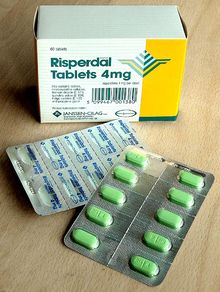
J&J Risperdal

Johnson & Johnson's schizophrenia drug Risperdal. Photographer: JB Reed/Bloomberg News.

A Johnson & Johnson (JNJ) unit was ordered by a South Carolina judge to pay more than $327 million in penalties for deceptively marketing the antipsychotic drug Risperdal as safer and better than competing medicines.

J&J’s Ortho-McNeil-Janssen Pharmaceuticals unit repeatedly violated the state’s consumer-protection laws by sending a 2003 letter to doctors touting Risperdal as superior to rival drugs and including deceptive information in the product’s warning label, Judge Roger Couch in Spartanburg, South Carolina, concluded.

The drugmaker’s executives “allowed the profit-at-all- costs mentality to cloud” their judgment in connection with the drug’s marketing campaign and its labeling, Couch said in his 17-page ruling.

Janssen official said yesterday they’ll appeal Couch’s order and maintained the company fully disclosed Risperdal’s health risks and properly marketed the antipsychotic medicine.

“We don’t believe that the dissemination of an FDA- approved package insert constitutes a violation of the South Carolina Trade Practices Act,” Kara Russell, a spokeswoman for Janssen said in an e-mailed statement. “We do not believe the ruling can be upheld on appeal.”

South Carolina’s lawyers, who originally sued the J&J unit in 2007 for making misleading claims about Risperdal, sought billions of dollars in penalties over the targeted marketing and labeling material.

Sales Decline

Risperdal’s global sales peaked at $4.5 billion in 2007 and declined after the company lost patent protection. The drug generated $3.4 billion in sales in 2008, or 5.4 percent of New Brunswick, New Jersey-based J&J’s total revenue, according to company filings. Sales of the drug fell to $527 million last year, according to a January earnings report.

Risperdal Consta, the long-acting version of the antipsychotic drug, generated $1.5 billion in sales last year for J&J.

The state’s case centered on drug-safety claims that J&J and Janssen made in November 2003 correspondence to about 700,000 doctors across the U.S., including more than 7,000 in South Carolina.

The U.S. Food and Drug Administration responded with a warning letter saying J&J made false and misleading claims that minimized the potentially fatal risks of diabetes and overstated the drug’s superiority to competing products.

South Carolina’s lawyers argued during a two-week trial of the state’s suit that Risperdal’s safety label also downplayed diabetes and other health risks.

‘Clever Effort’

The faulty labels were included in as many as 722,000 Risperdal prescriptions written in South Carolina from 1994 to 2007, the state’s lawyers told Couch at an April hearing. The deceptive information also was presented in 183,144 sales calls on doctors by Janssen drug representatives, and 496,565 sample boxes distributed over that 13-year period, South Carolina’s lawyers argued.

In his ruling, Couch found the Risperdal letter to South Carolina doctors was a “clever effort” to “manipulate the message” about the drug.

He concluded penalties were warranted for 7,180 letters Janssen officials mailed to physicians in the state along with another 36,372 instances in which the drugmaker’s salespeople used the missive to market Risperdal in person, according to court records.

$4,000 per Violation

Couch awarded South Carolina a total of $174.2 million in penalties over the letter based on a rate of $4,000 per violation of the state’s consumer-protection laws, according to his ruling.

He also found 509,499 sample boxes of Risperdal distributed in the state contained labels with deceptive materials that warranted penalties. The judge awarded the state $152.8 million in penalties over the label at a rate of $300 per violation.

J&J’s lawyers claimed in court papers that the state engaged in “triple counting” by seeking to have prescriptions, marketing letters and sales calls on individual doctors included as violations.

Penalizing the drugmaker for multiple contacts with doctors who were allegedly “misled or deceived each time he or she had been exposed to” the targeted information would be unfair, Steven Pugh, one of the company’s attorneys, said in May 3 filing.

Hold Them Accountable

The award puts drugmakers on notice that if they “try to spin information or try to see what they can get away with,” state officials will hold them accountable, Donald Coggins, a Spartanburg-based lawyer who represented the state, said in an interview yesterday.

The case is the third of about 10 state lawsuits to be considered by jurors over J&J’s Risperdal marketing campaigns. In June, J&J won dismissal of Pennsylvania’s suit alleging the company hid the drug’s diabetes risk and tricked regulators into paying millions more than they should have for the medicine.

A Louisiana jury in October ordered the drugmaker to pay $257.7 million in damages to that state for making misleading claims about Risperdal’s safety. A judge later added $73 million in legal fees to the award.

A West Virginia judge in a 2009 non-jury trial awarded $3.95 million, finding the company misled doctors about the risks and benefits of Risperdal. The state dropped its Risperdal claim after J&J won an appeal, company officials said in February.

J&J fell 39 cents to $66.09 in New York Stock Exchange composite trading yesterday. J&J’s 4.95 percent bonds due in 2033 fell 1.36 percent to 102.3 cents on the dollar, according to Trace, the bond-price reporting system of the Financial Industry Regulatory Authority.

The case is State of South Carolina v. Janssen Pharmaceuticals, 2007-CP-42-1438, Circuit Court for Spartanburg County, South Carolina (Spartanburg).

To contact the reporter on this story: Jef Feeley in Wilmington, Delaware, at jfeeley@bloomberg.net; Steven Church in Wilmington, Delaware, at schurch3@bloomberg.net

To contact the editor responsible for this story: Michael Hytha at mhytha@bloomberg.net

This post is subject to the DISCLAIMER AND TERMS OF USE of this website.

Friday, June 3, 2011

SC House Agrees to Amended Tort Reform Bill

I received word yesterday that the house passed the amended tort reform bill by a vote of 99-16.  The State Newspaper has a short write-up about it here, and cut and pasted below.

House agrees to amended tort reform bill

 
House members agreed to Senate amendments Thursday on a tort reform bill.

Under the measure, punitive awards would be limited to $500,000 or three times the actual damages, whichever is greater.

In the worst cases, punitive awards would be capped at the greater of $2 million or four times the actual damages, which includes things like lost wages and medical expenses. 

The House vote signals a victory for Gov. Nikki Haley who made tort reform one of her priorities this session.

Wednesday, June 1, 2011

Update on South Carolina Tort Reform, Punitive Damages Caps, Etc.

I have previously blogged about tort reform efforts in the South Carolina General Assembly this year.  (See prior posts here and here for context).  This issue has been consuming a great deal of my time in the last couple of months, and it seemed to be an appropriate time to provide an update.

As you may recall, there was an effort brewing to legislatively overturn Branham v. Ford Motor Co.  Some members of the Legislature viewed the case as judicial activism and a movement away from the comments to Restatement (Second) of Torts § 402A, which have been codified at S.C. Code § 15-73-30 as the legislative intent of South Carolina's Defective Products Act .  The first effort to overturn the case came in the form of a "renewal" of sorts of South Carolina's Defective Products Act.  Basically, the amendment to the tort reform bill was to strike the prior act (S.C. Code §§ 15-73-10, 20, and 30), and then renew it in identical form as S.C. Code §§ 15-73-11, 21, and 31.  The rationale behind this amendment was that by renewing the statute, the Legislature would re-affirm that South Carolina follows the Restatement (Second) of Torts, and not the Restatement (Third) (as suggested by the court in Branham).

After the initial amendment to renew the language of the Defective Products Act, the focus shifted.  Instead of renewing the language, the effort shifted toward a dialogue about adopting the Restatement (Third) of Torts as South Carolina's products liability law.  Therefore, over the last couple of weeks, I have spent a substantial amount of time drafting papers on what the court did in Branham, options for compromise, distinctions between the Restatement (Second) and Restatement (Third), and what other states have done with regard to adopting either of them. 

In short, my research revealed that although there are some worthwhile provisions of the Restatement (Third) of Torts, this is not something (in my opinion) that South Carolina should do "on the fly," by amendment, and toward the end of a legislative session.  If we are going to talk about substantial changes to the products liability law in South Carolina, this blogger's opinion is that it should take the form of a separate bill and should involve debate and input from members of the bar who practice in this area.  Adopting the Restatement (Third) would change South Carolina's products liability law overnight.  As a lifelong South Carolinian, I can say (with pride) that we do not do anything very quickly.  Adopting the Restatement (Third) should not be an exception based on the differences between it and current South Carolina law.  I welcome your comments on this issue.

After spending yesterday at the Legislature with my colleague Gray Culbreath, President of the South Carolina Defense Trial Attorneys' Association, we learned that the effort to overturn Branham no longer appears to be a focus of the tort reform bill.  Instead, the focus is on capping punitive damages, and there is no language to adopt the Restatement (Third) or to overturn Branham.  The most current form of the bill, as given second reading by the Senate yesterday evening, can be found at the following link:

http://www.scstatehouse.gov/sess119_2011-2012/prever/3375_20110531.htm

My understanding is that the provisions relating to the capping of punitive damages are based in large part on a Florida statute, with some variations.  Because I have been focused on the Branham issue, I have not fully analyzed the punitive damages provisions.  However, a quick review reveals that the bill provides for bifurcation of trials where punitive damages are at issue and a cap on punitive damages of the greater of three times the amount of compensatory damages or $500,000.  However, there are some exceptions in the bill that either increase this cap or remove it altogether, based on certain conduct.   

There is an article in The State today about the Senate's debate and the current status.  You can find it here, and cut and pasted below.

Senate caps lawsuit awards

-  joconnor@thestate.com
The South Carolina Senate agreed to limit lawsuit awards Tuesday, ending years of debate about whether to make the state legal system more business-friendly.

The bill would create a tiered system of damages based upon the degree of negligence or criminal behavior involved. Most lawsuits would cap punitive damages at $500,000, or three times actual costs, whichever is greater.

But that cap rises to $2 million, or four times actual damages, under several circumstances, including if an injury resulted because of an unreasonable profit-based decision or if the person or business that caused the injury was subject to a felony conviction.
gavel        The cap is lifted entirely if the person or business that caused the injury is convicted of a felony, intended to harm or was under the influence of drugs and alcohol.

The vote knocks out a key issue pushed by Senate Republican leadership, Gov. Nikki Haley and business interests in the session’s final week. The bill heads back to the House, which approved a $350,000 cap, or three times actual damages, with no exemptions earlier this year.

Business groups noted the caps are still among the highest in the Southeast, but they supported the compromise.

“It’s a decent day’s work,” said Rick Scott, president of the South Carolina Trucking Association. “This puts us close to being competitive; … it is a move forward.”

Attorneys said despite debating the need for years, the bill addressed a problem which did not exist.

“We still do not believe there is a need to put caps on punitive damages,” said Mark Joye with the South Carolina Association for Justice.

The bill has churned in the Senate for weeks as others issues, such as the budget, took precedence and those who opposed the caps sought to avoid a vote. But Haley and the state Republican Party dialed up the pressure Tuesday, with the governor insisting on the House version of the bill and telling lawmakers she would include their vote on her end-of-session report cards.

Lawmakers huddled all day, but it took a late afternoon five-minute recess that stretched more than three hours for the two sides to finally parse the bill’s language. Business lobbyists huddled near the House chamber poring over the latest revision, while lobbyists for trial lawyers did the same thing across the lobby.

Senators shuttled back and forth between the two groups with the others’ thoughts.

The bill now heads back for the House to agree or disagree with the Senate version. In a letter to Senators Tuesday, Haley said she supports the House version of the bill. If the House insists on its version, House and Senate lawmakers will have to work out a compromise.

“We got as good a bill as we can under the circumstances,” said Sen. Gerald Malloy, D-Darlington and an opponent of the caps. “We need to lean on the Senate to try to maintain the Senate position.
Reach O’Connor at (803) 771-8358
This post is subject to the DISCLAIMER AND TERMS OF USE of this website.

SC Attorney General Action Against GlaxoSmithKline

South Carolina Attorney General Alan Wilson has brought another lawsuit against a pharmaceutical manufacturer.  On May 17, the Office of the Attorney General filed a lawsuit against GlaxoSmithKline in which he alleges that the pharmaceutical manufacturer improperly marketed the diabetes drug Avandia.  I have not seen a copy of the complaint, but an article here at wcnc.com (and cut and pasted below) seems to suggest that this is another off-label promotion lawsuit, similar to past lawsuits brought by South Carolina against pharmaceutical companies.  (See blog posts about prior off-label promotion lawsuits here).  There are also some inadequate warning allegations according to the article. 

SC prosecutor suing GlaxoSmithKline over Avandia

SC prosecutor suing GlaxoSmithKline over Avandia
Credit: FILE PHOTO

by MEG KINNARD / Associated Press

COLUMBIA, S.C. (AP) -- British drug maker GlaxoSmithKline PLC improperly marketed the diabetes drug Avandia to South Carolina consumers, hiding the medication's harmful side effects, according to a lawsuit filed by the state's top prosecutor.

Posted on June 1, 2011 at 8:56 AM

A spokeswoman for the company, however, said GlaxoSmithKline supports both its drug and the ways in which it was marketed.

In a lawsuit filed May 17 in Spartanburg County, Attorney General Alan Wilson argued that the drug maker acted negligently when it claimed that Avandia did not put patients' hearts at risks and could actually reduce the potential for heart problems.

"GSK did not just fail to disclose the potential cardiovascular risks Avandia posed, which include heart attacks and sudden cardiac death, it affirmatively represented that Avandia could reduce diabetics' cardiovascular risks," Wilson wrote. "GSK knew or should have known that these representations were not true and likely to deceive."

First approved by the Food and Drug Administration in 1999, Avandia quickly became the top-selling diabetes pill in the world. The drug works by increasing the body's sensitivity to insulin, a key protein needed for digestion that diabetics don't adequately produce.

But Avandia's popularity has diminished since 2007 when its heart risks were first publicized. That year, the New England Journal of Medicine printed an article that evaluated dozens of studies on Avandia, concluding that the drug increases the risk of heart attack and death.

In July 2007, the FDA ruled that Avandia could remain on the market, but sales had already taken a hit. At a safety panel meeting that month, FDA scientists said that Avandia had caused approximately 83,000 heart attacks since coming on the market, according to Wilson's lawsuit.

GlaxoSmithKline rolled out new labels in February to indicate that Avandia is intended only for patients who cannot control their blood sugar with any other diabetes medication on the market. Regulators in Europe have pulled the drug off the market altogether, and other authorities including Louisiana's attorney general are investigating the drug.

The exact amount South Carolina was seeking was not clear. Wilson is seeking a civil penalty of up to $5,000 for each action in violation of the state's unfair trade practices act, as well as unspecified punitive damages and $2,000 for each false claim or overstatement made to the state in connection with prescriptions for its Medicaid recipients.

"GlaxoSmithKline stands behind the safety and efficacy of Avandia when used appropriately and according to its label," said Bernadette King, a spokeswoman for the company. "GSK acted properly and responsibly in conducting its clinical trial program for Avandia, in marketing the medicine, in monitoring its safety once it was approved for use and in updating information in the medicine's labeling as new information became available."

The lawsuit, which says millions of dollars in state funding was spent on prescriptions for Medicaid patients and state employees, also cites several warnings from the FDA for "false and deceptive advertising" that Wilson says attempted to minimize the required warnings.

This post is subject to the DISCLAIMER AND TERMS OF USE of this website.

Thursday, May 26, 2011

Drilling Down: Breach of Express Warranty

Okay, let's get this warranty party started.  A South Carolina products liability action can be brought pursuant to various different theories, including strict liability, negligence, and breach of warranty.  (For further explanation on this, I encourage you to see "The Basics" generally, and specifically this post).  If your theory of choice is "breach of warranty," then it is important to understand that there are different types of warranties, as provided by statute and common law.  One is breach of "express warranty," which is the subject of today's post. 

An express warranty is probably what a non-practioner/layperson thinks of when they hear "breach of warranty."  A warranty generally conjures up images of that long, boilerplate document you received when you last purchased GLH Spray-On Hair, a Super Bass-o-Matic, Flowbee, or other product.  (If you have a favorite product infomercial or SNL parody that I can link, shoot me a comment...I love them).  It usually lays out a ton of different terms and conditions, and many times it requires the purchaser to mail in some sort of postcard so as to register the purchase of the product and make the warranty effective. 

Although this is an example of an express warranty, South Carolina law does not limit an express warranty to the terms contained in a document entitled "Warranty."  Instead, South Carolina has codified what constitutes an express warranty at S.C. Code Ann. § 36-2-313.  This statute sets forth the following:
SECTION 36-2-313. Express warranties by affirmation, promise, description, sample.
 
(1) Express warranties by the seller are created as follows:
(a) Any affirmation of fact or promise, including those on containers or labels, made by the seller to the buyer, whether directly or indirectly, which relates to the goods and becomes part of the basis of the bargain creates an express warranty that the goods conform to the affirmation or promise.
(b) Any description of the goods which is made part of the basis of the bargain creates an express warranty that the goods shall conform to the description.
(c) Any sample or model which is made part of the basis of the bargain creates an express warranty that the whole of the goods shall conform to the sample or model.
(2) It is not necessary to the creation of an express warranty that the seller use formal words such as "warrant" or "guarantee" or that he have a specific intention to make a warranty, but an affirmation merely of the value of the goods or a statement purporting to be merely the seller's opinion or commendation of the goods does not create a warranty.
There is South Carolina case law interpreting this statute that is helpful.  See, e.g., Triple E, Inc. v. Hendrix and Dail, Inc., 344 S.C. 186, 543 S.E.2d 245 (Ct. App. 2001); First State Sav. and Loan v. Phelps, 299 S.C. 441, 385 S.E.2d 821 (1989). 

However, the most helpful resource I found was to go to the statute itself and read the Official and South Carolina Reporter's Comments.  Some bullet points from these comments are as follows:
  • Express warranties rest on "dickered" aspects of the individual bargain and are the essence of the bargain.  (I had to look up "dickered"....it means the "process of bargaining" or something to that effect).  Official Cmt. 1.
  • The statute deals with affirmations of fact, descriptions of the goods, exhibition or samples, or other parts of the negotiation the result in a contract.  Intent to create a warranty is not required.  Affirmations of fact by the seller include descriptions of the goods, and a buyer does not have to show reliance.  Official Cmt. 3.
  • Express warranties deal with what a seller has agreed to sell as described.  Therefore, a clause generally disclaiming "all warranties, express or implied" cannot reduce the seller's obligations with regard to the description and cannot be given literal effect.  This does not mean people cannot make their own bargain, but good faith is a factor for determining what was agreed to by the parties, and the probability is small that the buyer did not pay for what was described.  Official Cmt. 4.
  • A description does not have to be words.  Technical specifications, blueprints, samples, illustrations, etc. may be an affirmation of fact if part of the basis of the bargain.  Official Cmt. 5.
  • When the affirmation of fact occurs is immaterial.  The question is whether it was a to be regarded as part of the contract.  Official Cmt. 7.  (Although immaterial, it sounds like it has to come before the sale, though, to be part of the bargain...that is just my opinion).
  • Typical statements held to be an express warranty under South Carolina law include representing that a carpet is of first quality, colorfast, will not fade, and is suitable for the hotel needs of a buyer.  S.C. Reporter Cmt. (citing Spartanburg Hotel Corp. v. Alexander Smith, 231 S.C. 1, 97 S.E.2d 199 (1957)).  Another example is "fertilizer compounded of the purest materials and of the highest standard."  Id. (citing Robson v. Miller, 12 S.C. 586 (1879)).  Another example is a case where insecticide was represented to be "not harmful to pigs and would not damage buyer's pigs."  Id. (citing Herndon v. Southern Pest Control Co., 307 F.2d 753 (4th Cir. 1962)).
  • A seller does not have to use the word "warrant" or even intend to create a warranty.  S.C. Reporter Cmt.
I will take a closer look at some of these cases and include them in future Case Briefs.  Have a great Memorial Day weekend.

This post is subject to the DISCLAIMER & TERMS OF USE of this website.

Tuesday, May 17, 2011

Upcoming Focus on Breach of Warranty Theory

I have a great tool for this blog called "Google Analytics," and I check it fairly frequently to determine how many people come to the site and other useful information.  If you blog, I would highly recommend checking it out and incorporating it into your site.  (Not to worry, privacy enthusiasts...it does not tell me who you are or any identifying information).  However, the tool provides me with what key word searches lead people to the site, as well as a listing of the pages on the site that are most frequently reviewed by site visitors.   

Surprisingly, many, many people come to this blog as a result of key word searches relating to "breach of warranty" or some variation of that search term.  It is a recurring, daily key word search that brings people to the site, and this is somewhat surprising to me.  When I think of products liability law, I think of strict liability, negligent design, warnings, etc.  Although breach of warranty is an additional theory in this body of law, I find in my own practice that there is not as great of a focus on it and how it relates to defect.  Although it is frequently asserted as a theory of recovery, I generally find that practitioners focus more on negligence and strict liability, and breach of warranty is kind of thrown in purely to cover all the bases.

Well . . . "the people have spoken."  There is clearly an interest in breach of warranty law, as indicated by my google analytics data.  Therefore, I am going to try and start posting more in the future about it.  I am hesitant to say that this is the beginning of a "series" per se, but we will see what happens.  (Usually, when I do a "series" on this blog, it is because I have already conducted a substantial amount of research in the subject matter of the series, i.e., as part of an article for publication.  That is not the case here).  So look for more warranty case briefs and posts in the future.  I am going to try and make it a focus since I have not devoted many posts to this subject area in the past.

Monday, May 16, 2011

Case Brief: Rhodes v. McDonald

Rhodes v. McDonald, 345 S.C. 500, 548 S.E.2d 220 (Ct. App. 2001), involves the installation of vinyl siding.  It stands for the principle that a plaintiff cannot recover punitive damages in a breach of warranty action.

FACTUAL BACKGROUND: Defendant Bill Gillespie ("Gillespie") owned and operated an insulation company, Defendant Southern Insulation ("SI").  345 S.C. at 502, 548 S.E.2d at 221.  Plaintiffs contracted with SI to install vinyl siding on their mobile home and extend the room over their kitchen.  Id.  After installation, plaintiffs complained that the siding was "wavy looking."  Id.  Despite assurances that it would "settle down," it became worse and began pulling apart.  Id.  It also led to the roof "bowing up."  Id.

PROCEDURE: Plaintiffs brought an action against defendants for breach of contract and breach of certain implied warranties.  345 S.C. at 501, 548 S.E.2d at 221.  A jury awarded plaintiffs $11,464.50 in actual damages and $27,500 in punitive damages.  Id. at 503, 548 S.E.2d at 221.  Defendants appealed. 

ISSUE: Whether the trial court erred in failing to grant defendants' motions for directed verdict (1) as to Gillespie's individual liability and (2) as to the availability of punitive damages in the breach of contract and breach of implied warranty causes of action.  345 S.C. at 501, 548 S.E.2d at 221.  Defendants also contended that the trial court erred in submitting an improper special verdict form to the jury.  Id.

DISPOSITION: Affirmed with regard to individual liability of Gillespie.  Reversed with regard to award of punitive damages.    The special interrogatories question was not preserved for appeal (and moot in light of the punitive damages reversal).

OPINION: With regard to the availability of punitive damages, the court agreed that the trial court should not have submitted this issue to the jury.  345 S.C. at 503-05, 548 S.E.2d at 221-23.  The measure of damages that a buyer may recover under the Uniform Commercial Code ("UCC") is set forth at S.C. Code sections 36-2-714 and 715.  Id. at 503, 548 S.E.2d at 222.  The court reviewed the wording of both statutes and concluded that the plain language of the statutes indicated intent by the legislature to limit damages recoverable for breach of warranty to actual, incidental, and consequential damages.  Id. at 503-04, 548 S.E.2d at 221-22.  There was no provision for punitive damages in either statute.  Id.  This is further supported by S.C. Code section 36-1-106(1), which provides, in part, that "neither consequential or special nor penal damages may be had except as specifically provided in the act or by other rule of law."  Id. at 505, 548 S.E.2d at 222.  Again, the court pointed out that the UCC does not include such a provision.  Id.  Although punitive damages are allowed in South Carolina in a breach of contract action where the breach is accompanied by a fraudulent act, there was no such evidence in the case.  Id. at 505, 548 S.E.2d at 222-23.

With regard to the trial court's failure to direct a verdict for Gillespie as to his individual liability, the court disagreed.  Id. at 505, 548 S.E.2d at 223.  SI was not incorporated at the time of the contract, and the general rule is that owners of unincorporated companies are not entitled to the same protection as owners of incorporated entities.  Id.

Finally, the court held that defendants had not adequately preserved their argument relating to the trial court's submission of special interrogatories to the jury.  Id. at 506, 548 S.E.2d at 223.  Therefore, the court did not address this issue, but also pointed out that it was moot in light of the reversal of the punitive damages award.

This post is subject to the DISCLAIMER AND TERMS OF USE of this website.